
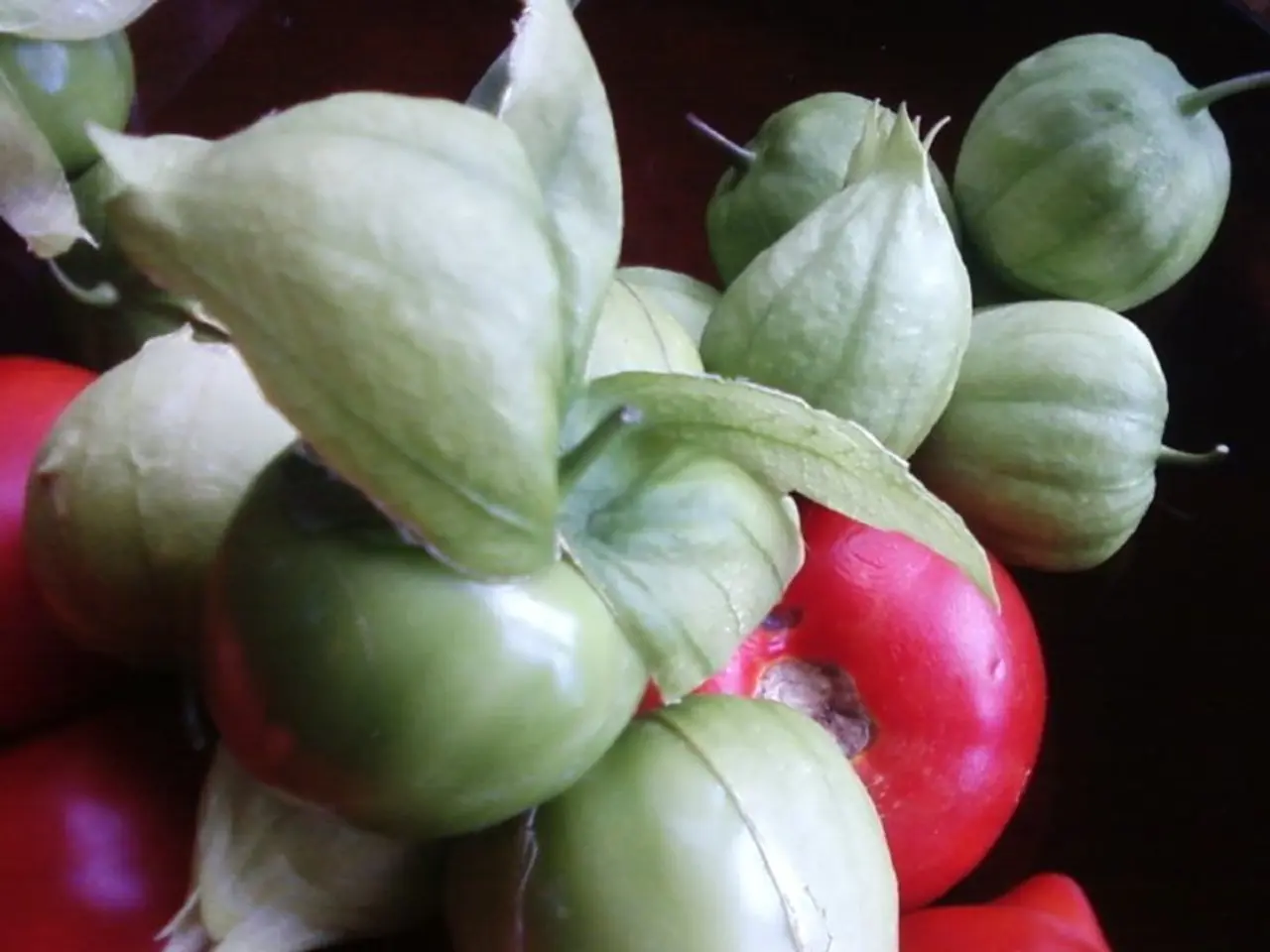
Avoid consuming tomatoes during winter time is illogical and harmful to the environment.
In a bid to promote climate-friendly agriculture and reduce carbon footprint, the author proposes a restructuring of the UK farming industry towards smaller, local businesses that rely more heavily on domestic labor. This approach, when combined with seasonal eating and smart farming practices, can help maintain a plant-based diet in the UK without compromising on sustainability.
**1. Seasonal and Local Sourcing**
Focusing on eating vegetables that are in season and can be grown outdoors in the UK climate is key. For instance, tomatoes can be grown outdoors during the warmer months, reducing the need for energy-intensive methods like heated greenhouses.
**2. Varietal Selection for Local Conditions**
Choosing hardy and adapted tomato varieties, such as heritage or cherry tomatoes, can increase resilience and yield in unheated environments.
**3. Use of Natural Microclimates and Cold Frames**
Unheated structures like cold frames, cloches, or lean-to greenhouses can protect plants from wind and frost, utilising solar gain and minimising energy inputs.
**4. Supporting Local Agriculture and Reducing Food Miles**
Purchasing from local farmers' markets, joining community-supported agriculture (CSA) schemes, or growing your own vegetables supports regional food production and reduces transportation emissions.
**5. Reducing Meat and Animal Products**
Adopting a plant-based diet significantly reduces food-related emissions, with studies suggesting up to a 75% carbon footprint reduction compared to meat-heavy diets.
**6. Efficient Gardening Practices**
Organic, no-dig gardening, crop rotation, and companion planting maintain soil health and reduce the need for synthetic inputs.
**7. Community and Knowledge Sharing**
Engaging with local horticultural clubs or groups can help learn and share sustainable growing practices suitable for the local climate.
---
**Table: Approaches to Growing Tomatoes Sustainably in the UK**
| Strategy | Description | Impact on Carbon Footprint | |----------------------------------|------------------------------------------------|----------------------------------| | Grow Seasonal & Hardy Varieties | Choose tomatoes that grow outdoors in summer | Minimises energy for heating | | Use Cold Frames & Cloches | Protect plants naturally without heat | Reduces fossil fuel use | | Support Local Food Networks | Buy from local farmers or grow your own | Cuts food miles and transport emissions | | Adopt Plant-Based Diet | Reduce meat consumption | Largest carbon footprint reduction (up to 75%) | | Organic and Efficient Gardening | Use sustainable soil and planting methods | Maintains ecosystem health |
By adhering to these strategies, it is possible to maintain a plant-based diet in the UK that is climate-friendly, supports local agriculture, and avoids the high carbon costs associated with heated indoor growing for tomatoes and other vegetables.
The author acknowledges his own hypocrisy, along with many Riverford veg box customers, in their reliance on imported vegetables during winter months. However, he emphasises that ships are a more environmentally friendly option for importing vegetables compared to planes, and Corn salad, winter purslane, and oriental greens can provide winter salad alternatives.
The author also notes that heating glass to produce out-of-season tomatoes in the UK has a larger carbon footprint than importing them from Spain or Italy. While tomatoes can be grown from February to November with heat, this consumes a lot of fuel. The tomato shortage of 2023 was exacerbated by Brexit-related trade barriers and unseasonably cold weather in Andalusia and Morocco.
Riverford does not sell anything from heated glass or anything that has been on an airplane. Celeriac can replace celery, and purple sprouting can replace broccoli. Growing tomatoes in the UK without heat results in poor flavor and a short season from July to October.
Heatwaves, late frosts, torrential rain, and gales are adding unpredictability and risk to farming that are seldom built into a grower's budget. The UK-only veg box from Riverford is selling better than it ever has, though still less than 5%. We should expect more vegetable shortages and higher prices due to changing weather patterns.
Better provision of training and support for new entrants in the farming industry would also aid in boosting supply. The radicchio/escarole family can provide great salads throughout the winter. Broccoli and green beans cannot be grown in the UK in January or March.
In a world serious about climate catastrophe, growing under heated glass and flying produce would be illegal. It is essential to prioritise sustainable farming practices and local agriculture to preserve our planet for future generations.
In the pursuit of climate-friendly agriculture, adopting sustainable strategies for tomato cultivation in the UK can significantly reduce the carbon footprint. This includes growing tomatoes during the growing season, using cold frames and cloches, supporting local food networks, and reducing meat consumption. Local gardening practices such as organic and efficient gardening, crop rotation, and companion planting can also maintain soil health and reduce the need for synthetic inputs. Engaging with local horticultural clubs or groups can help share sustainable growing practices suitable for the local climate. However, even with these efforts, dependence on imported vegetables during the winter months remains a challenge. If prioritizing climate catastrophe prevention, practices like growing under heated glass and air freight of produce would be prohibited to preserve the planet for future generations.




