
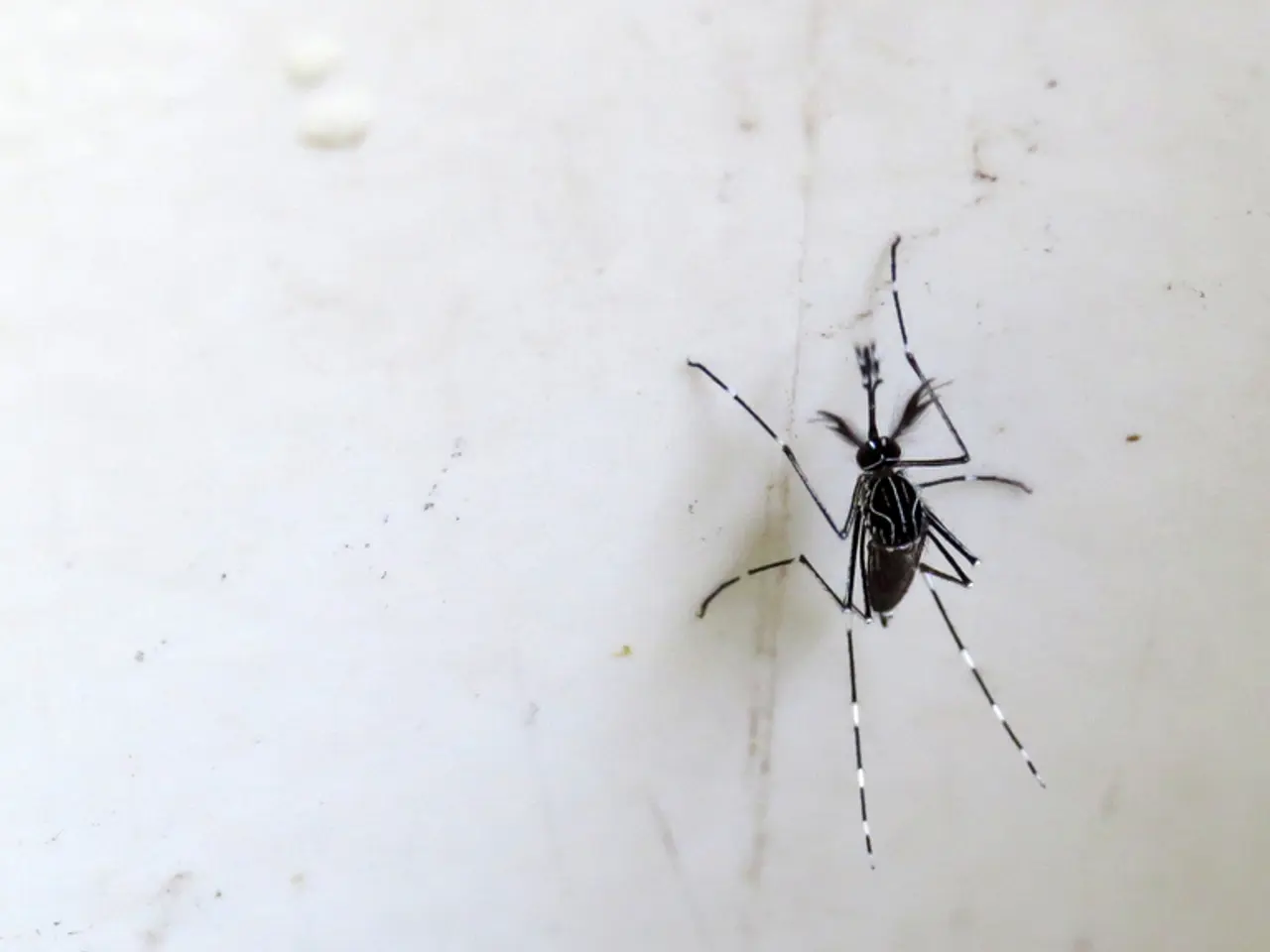
Concerns Arise Regarding Chikungunya Virus Impact on German Residents
In recent years, the number of Chikungunya infections among travelers returning to Germany has been on the rise. This mosquito-borne disease, whose name originates from a Makonde language term meaning "the one who walks bent over," is primarily transmitted by the bite of an infected female Aedes mosquito.
The Aedes mosquito species, including the tiger and yellow fever mosquitoes, were previously non-existent in Germany but have now spread to several states such as Bavaria, Baden-Württemberg, Rhineland-Palatinate, and Hesse. These species are moving further north as weather conditions warm due to climate change.
To combat the potential threat, Germany's prevention and control measures for the Chikungunya virus focus primarily on mosquito bite prevention, vector control, and surveillance. Since there is no widespread endemic transmission yet, the aim is to prevent local transmission through imported cases and control the vector population.
Key measures include personal protection against mosquito bites, such as using insect repellents regularly, wearing long-sleeved clothing and pants, especially during daytime when Aedes mosquitoes are active. Environmental and vector control involve reducing mosquito breeding sites by eliminating standing water in containers, ensuring proper water drainage, and applying larvicides where necessary to control mosquito populations.
Surveillance and monitoring are also crucial, with robust laboratory testing and healthcare worker training to identify cases early, along with monitoring imported cases to prevent local transmission. Public awareness campaigns are essential to inform travelers and residents about risks, symptoms, and prevention methods to reduce infection rates.
Vaccination for travelers at high risk of exposure is relevant, although no routine vaccination program exists in Germany. Two vaccines against the Chikungunya virus have been approved by Germany's Standing Commission on Vaccines (STIKO). However, the commission currently recommends vaccination for people traveling to outbreak areas or to endemic areas repeatedly or for more than four weeks, but not for the general population.
While Germany has not reported significant local Chikungunya outbreaks, the risk of diseases like Chikungunya becoming endemic in Central Europe is increasing due to climate change. However, the risk of major outbreaks in Central Europe is not particularly high at present.
The first time tiger mosquitoes were recorded in Germany was in 2007, and since then, around 800 imported cases of Chikungunya have been reported. Recent reports indicate that a person has contracted the Chikungunya virus in Alsace, just a few meters from the German border, highlighting the need for vigilance.
The joint pain from Chikungunya can last for months or even years, although most people recover within a week. The disease can be life-threatening for older people and those with underlying health problems. The Chikungunya virus is also transmitted by the yellow fever mosquito, Aedes aegypti, and the Asian tiger mosquito, Aedes albopictus, the same species that also spread the dengue and Zika viruses.
As the number of cases increases, it is crucial for Germany to stay vigilant and continue its preventive and surveillance efforts. This includes public information campaigns, vector control, and surveillance of imported cases, as well as targeted vaccination for travelers at high risk of exposure. While an endemic vaccine program or specific antiviral treatment for Chikungunya is not yet established in Germany, this may change as vaccines approved elsewhere become more available.
- In the context of climate change, the expansion of the Aedes mosquito species, known for transmitting not only Chikungunya but also diseases like dengue and Zika, raises concerns for health-and-wellness and environmental-science researchers in Germany.
- As the global health landscape shifts due to climate change, medical-conditions such as Chikungunya, which pose significant risks to older people and individuals with underlying health conditions, require increased surveillance and preventive measures in sectors of science, medicine, health-and-wellness, and environmental-science in countries like Germany.




