
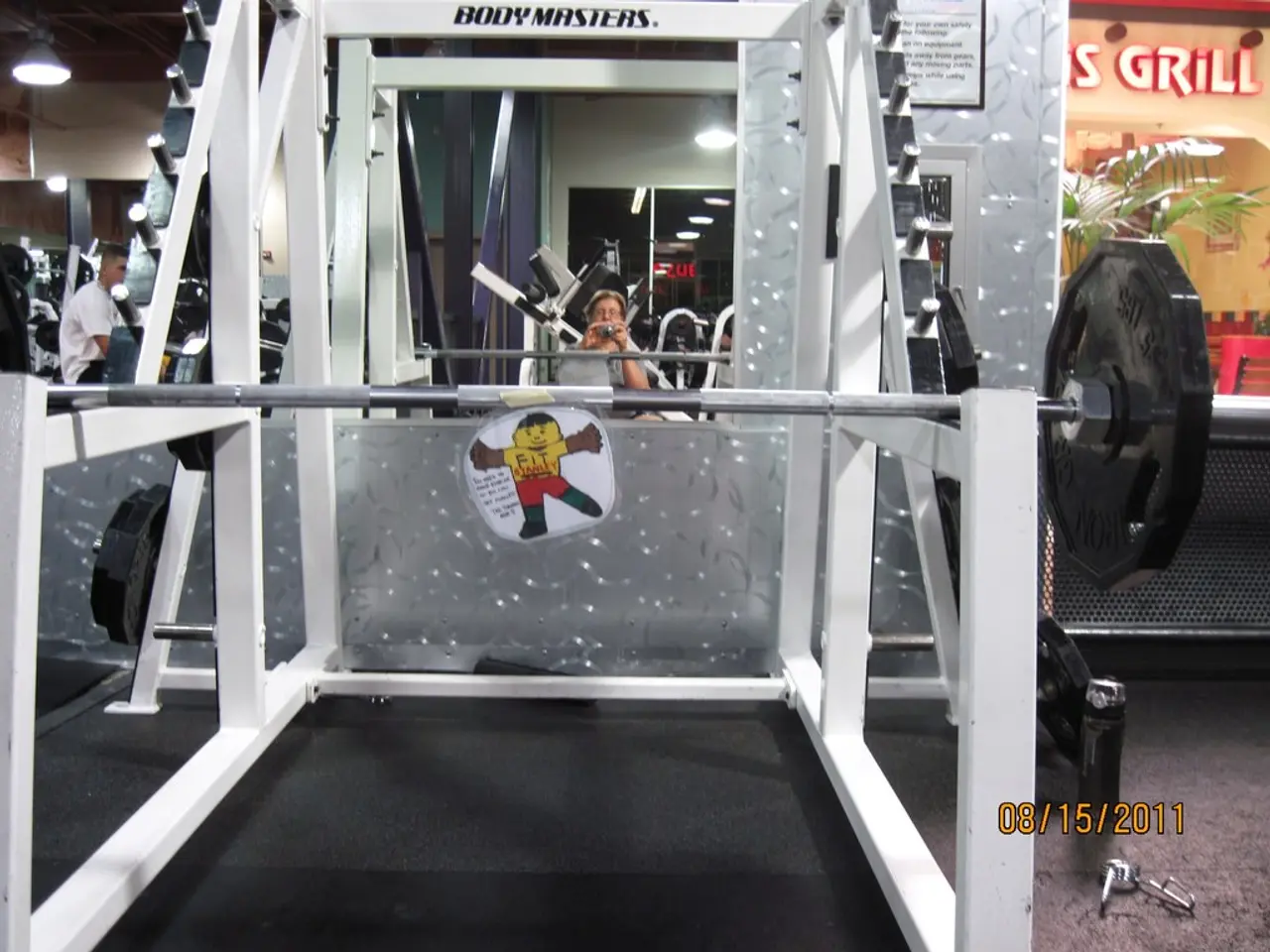
Debate over Choosing Free Weights versus Gym Machines for Workouts
In the realm of strength training, the debate between free weights and machines has been a long-standing one. Both tools offer unique benefits and drawbacks that can impact your workout routine, depending on your fitness goals and needs.
Free weights, such as barbells, dumbbells, and kettlebells, require more balance and stabilization, engaging additional muscles beyond the primary movers. This leads to greater activation of stabilizer muscles and promotes better overall functional strength and coordination. Free weights allow for a more natural movement pattern that mimics real-life activities, which can enhance strength carryover outside the gym. They also offer a greater range of motion and demand more control from the user [1][2].
On the other hand, machines provide a fixed path of movement that isolates specific muscles more efficiently with less need for stabilizer muscle activation. This makes them beneficial for beginners, those recovering from injury, or individuals targeting particular muscle groups without risking joint strain. Machines offer stability and support, which can be advantageous in maintaining proper form and progressively increasing resistance safely [1][3].
When it comes to muscle and strength gains, both free weights and machines are effective, but free weights tend to produce superior long-term muscle growth and strength gains due to their greater demand on multiple muscle groups, including stabilizers, and the natural movement patterns they require [1][2]. Research and expert opinion suggest that programs emphasizing free weights typically lead to more comprehensive strength improvements. However, machines can complement free weights by adding variety and targeting muscles that are difficult to isolate with free weights alone [1].
In summary, both tools have a role in a balanced strength training program. Free weights are generally preferred for overall muscle and strength development, while machines can be valuable for targeting specific muscles or supporting beginners and rehabilitation [1][2][3]. It's essential to understand your fitness goals and adapt your training accordingly, whether you favour functional strength workouts with free weights or prefer the controlled movements of machine workouts.
[1] Butler, R. (2021). Understanding the Benefits of Free Weights vs Machines for Strength Training. Today's Trainer.
[2] Rodgers, N. (2020). The Role of Free Weights and Machines in Strength Training. LifeTime.
[3] Journal of Strength and Conditioning Research (2020). The Impact of Free Weights and Machines on Muscle and Strength Gains.
- In the realms of fashion and style, shopping for performance-enhancing activewear has become a priority for many wellness enthusiasts, with an emphasis on sustainability and health-and-wellness fashion that blends comfort and style.
- To improve overall wellness and boost mental health, some individuals incorporate regular exercise and fitness-and-exercise activities into their daily routines, complementing their workout regimen with mindfulness practices and recovery techniques.
- In the scientific community, ongoing research addresses the potential benefits of wellness practices like meditation, yoga, and diets rich in fruits and vegetables on both physical and mental health, with promising evidence of improved immunity and reduced stress levels.
- For those seeking a more holistic approach to health and fitness, combining manual practices such as massage therapy and acupuncture with a balanced exercise and wellness routine can help promote relaxation, muscle recovery, and overall homeostasis within the body.




