
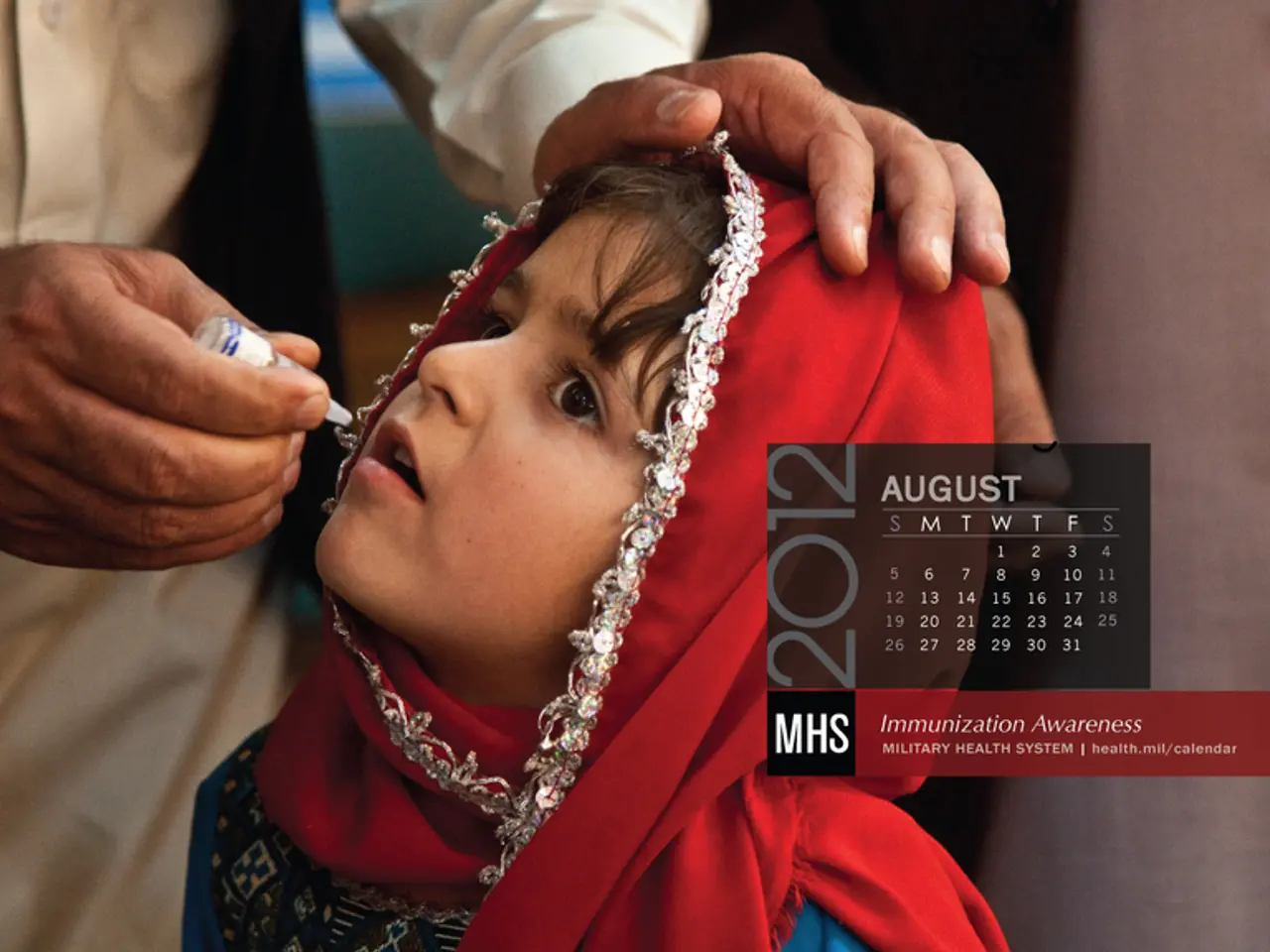
Decline in Child Vaccination Rates Over the Past Decade: Reasons Explored
Decline in MMR Vaccination Rates in the UK: A Persistent Concern
The decline in MMR (measles, mumps, rubella) vaccination rates in the UK, a trend that began in the 1990s, has persisted and remains a significant public health concern.
In 1998, a discredited report by Dr. Andrew Wakefield linking the MMR vaccine to autism was published, causing a sharp drop in vaccination rates. By 2003-04, the two-year MMR uptake in England had fallen to 79.9%. Although rates improved to around 93% by 2013-14, they have been declining again since 2014, reaching approximately 89% by 2023-24, according to Nuffield Trust analysis.
The decline in MMR vaccination rates is particularly pronounced in England, with areas such as London and the North West seeing particularly low levels. For instance, in Liverpool, only 73% of children were vaccinated against MMR by the age of five. In Hackney, east London, the figure was as low as 60% in 2023/24.
Several factors have contributed to this more recent decline. A general 15-year downward trend in immunisation, initially overlooked, is one such factor. Reduced capacity within the health service to deliver and follow up on vaccine programmes, leading to gaps particularly among vulnerable groups, is another. The COVID-19 pandemic has also disrupted vaccination delivery, although Europe, including the UK, was less affected than some regions.
The World Health Organisation identified vaccine hesitancy as one of the top 10 global health threats in 2019. This hesitancy is stronger in some minority communities due to a general mistrust in healthcare services. Anti-vaccine movements have seized on mRNA vaccines, citing disinformation as a reason.
In recent years, the England-wide rate for MMR has been below previous highs. The England-wide rate for the final quarter of 2024/25 was 88.8%, down from 92.7% 10 years ago. This decline poses public health risks, including rising measles outbreaks, which have been increasing globally as well.
Public health officials in the UK are urging increased vaccination uptake to combat this trend. The World Health Organisation's recommended target of 95% coverage for routine child vaccinations has not been met since 2021 in the UK.
References: 1. Nuffield Trust Analysis 2. European Centre for Disease Prevention and Control 3. Public Health Scotland
- The persistent decline in MMR vaccination rates, evident since the 1990s, has sparked concerns not just in health-and-wellness and mental-health spheres, but also in the broader general-news context, due to potential public health risks like increased measles outbreaks.
- The lowering of MMR vaccination rates, particularly in regions like London and the North West, is influenced not only by vaccine hesitancy, a global health concern identified by the World Health Organisation, but also by political factors, such as mistrust towards healthcare services in certain minority communities and the influence of anti-vaccine movements.
- As politics and science intertwine, anti-vaccine propaganda exploits recent advancements in science, like the mRNA vaccines, and disseminates disinformation, further fueling the decline in MMR vaccination rates and compounding public health concerns.




