
Dosage Information for Benlysta: Forms, Strengths, Administration Methods, and Further Details
In the treatment of Systemic Lupus Erythematosus (SLE) and Lupus Nephritis, a biologic drug named Benlysta plays a significant role. This drug belongs to the monoclonal antibodies class.
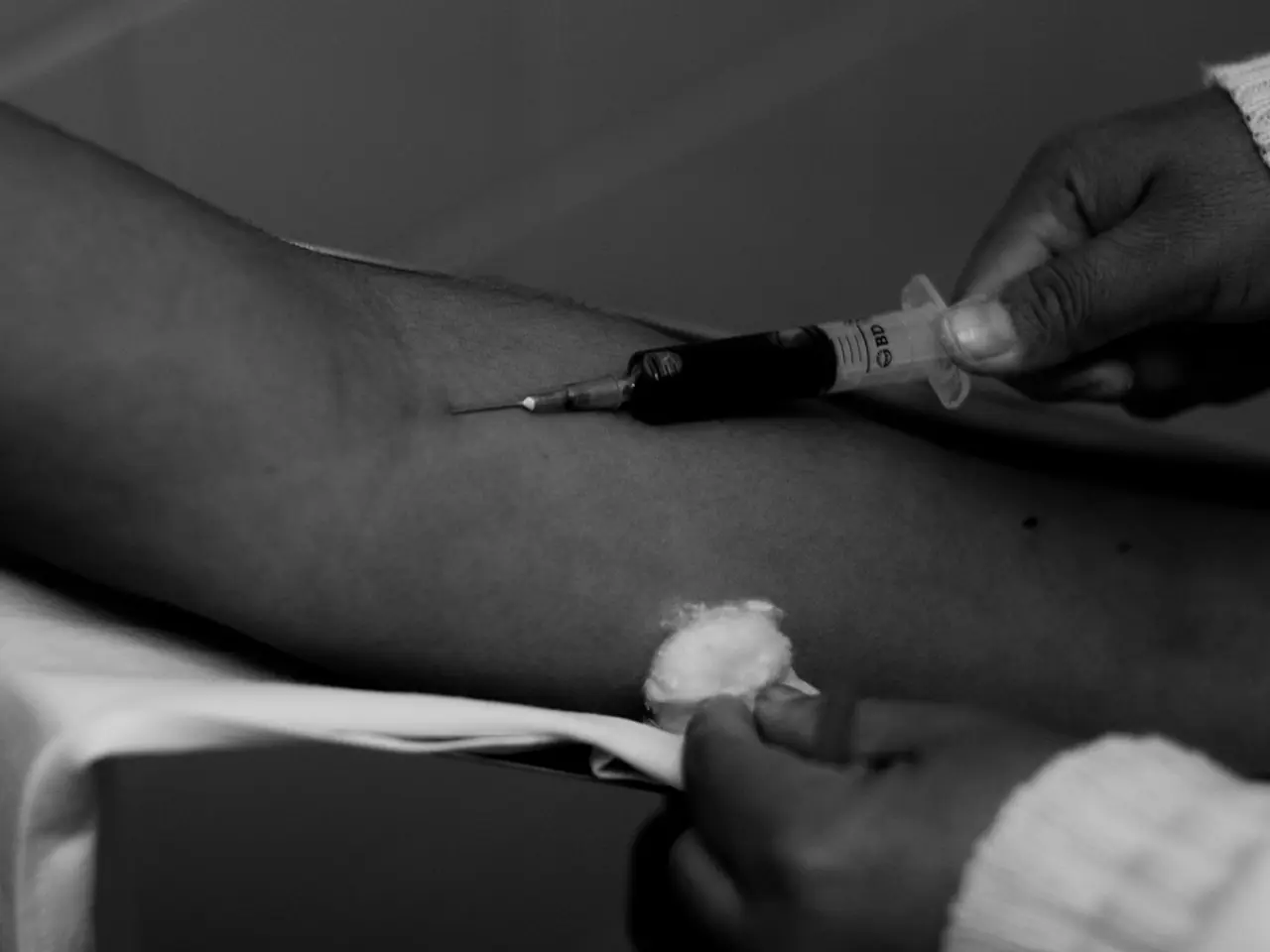
Benlysta is administered in two ways: self-injection or intravenous (IV) infusion. The choice of method depends on the patient's condition, age, and body weight.
For adults and children with SLE, the dosing is weight-based. When given as an IV infusion, the first three doses are administered every 2 weeks. Thereafter, Benlysta is given once every 4 weeks. For adults, Benlysta can also be administered by subcutaneous injection via a pre-filled pen or syringe once weekly. In children with SLE, the subcutaneous weekly dose depends on body weight.
For adults with active lupus nephritis (kidney disease due to lupus), Benlysta is given as two subcutaneous injections once weekly for the first 4 weeks. After this induction phase, the patient moves to one injection weekly.
In children with SLE and lupus nephritis ages 5 years and older, Benlysta is used for treatment. The loading dosage for IV infusion is 10 mg/kg once every 2 weeks for 3 doses, and the maintenance dosage is 10 mg/kg once every 4 weeks. For subcutaneous injection, the loading dosage is 400 mg once per week for 4 doses, followed by a maintenance dosage of 200 mg once per week.
It's crucial to follow the dosage that your doctor prescribes, whether you self-inject or receive an IV infusion. If you miss an appointment for an IV infusion, call your doctor's office as soon as possible.
Benlysta comes in two forms: powder for IV infusion and liquid solution in single-dose prefilled syringes and auto-injectors for subcutaneous injection. The strengths of Benlysta are 120 mg and 400 mg for IV infusion, and 200 mg per milliliter for subcutaneous injection.
Benlysta isn't available in a biosimilar version. Some pharmacies offer labels with large print, braille, or a code you scan with a smartphone to convert text to speech.
It's essential to note that both infusion and injection routes require medical supervision for initial doses due to possible infusion or hypersensitivity reactions. Self-injection is permitted after training if deemed appropriate by the doctor.
In summary, Benlysta is a long-term treatment option for SLE and lupus nephritis. The dosage varies based on the condition, patient age, and body weight, with treatment schedules ranging from weekly subcutaneous injections to IV infusions every 4 weeks. Always consult with your healthcare provider for personalised dosage and administration instructions.
[1] Reference: Benlysta Prescribing Information, 2021. GlaxoSmithKline.
- Benlysta, a drug used in rheumatology for Systemic Lupus Erythematosus (SLE) and Lupus Nephritis, falls under the monoclonal antibodies class.
- The administration of Benlysta can be either self-injection or intravenous (IV) infusion, determined by the patient's condition, age, and body weight.
- In the treatment of lupus nephritis, Benlysta is given to adults as two subcutaneous injections once weekly for the first 4 weeks, followed by one injection weekly.
- The dosage for Benlysta in patients with SLE, both adults and children, is weight-based, with subcutaneous weekly doses varying based on body weight.
- Chronic kidney disease, a common chronic disease associated with SLE and lupus nephritis, can be managed long-term with Benlysta treatment.
- It's crucial to adhere to the prescribed dosage for Benlysta, whether by self-injection or IV infusion, to ensure effective management of medical-conditions such as SLE and lupus nephritis, as part of a comprehensive approach to health-and-wellness.




