
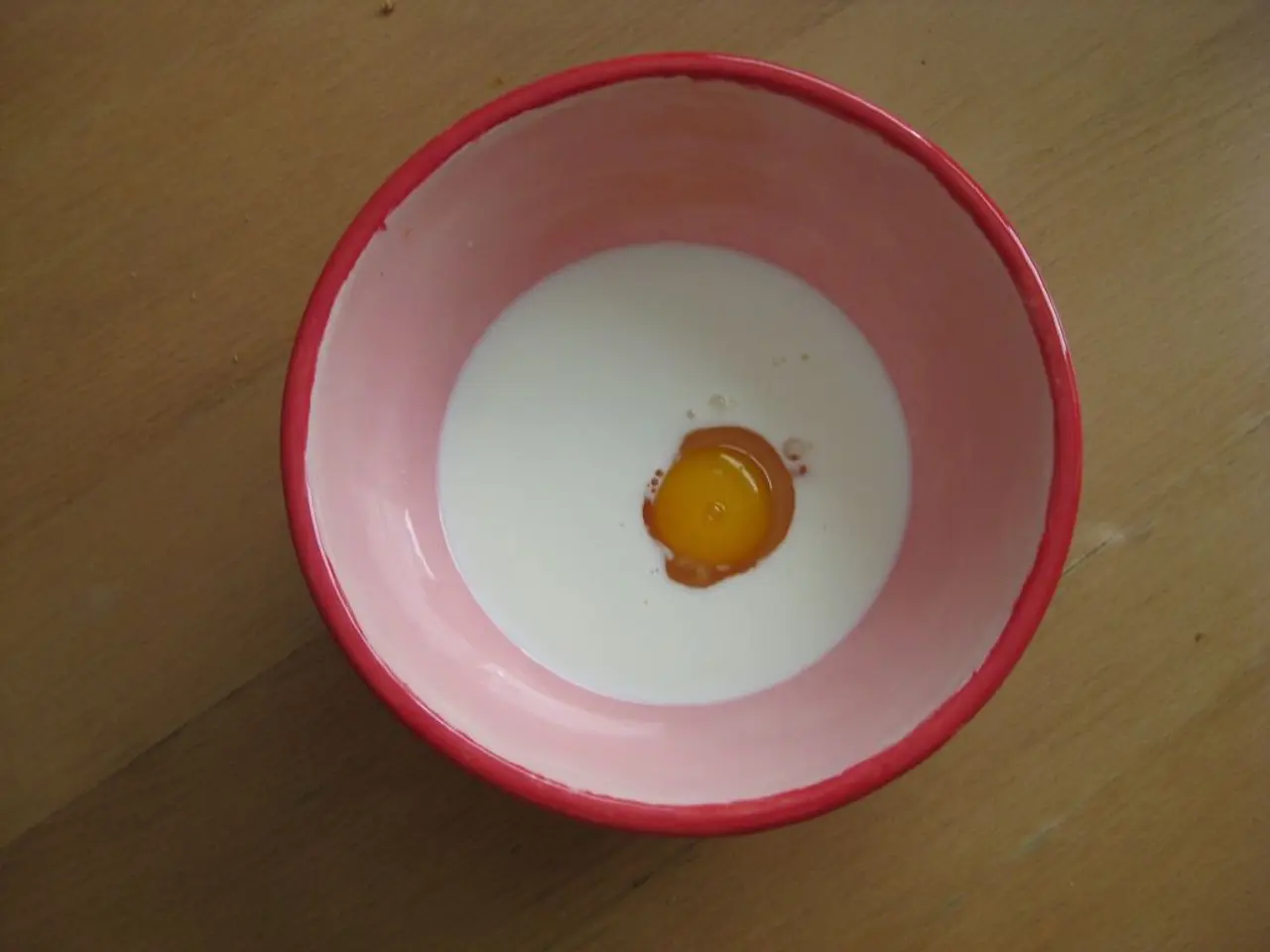
Duration of milk after the expiration date: A question regarding the longevity of milk beyond its stated expiration point.
========================================================
Pasteurized milk, a staple in many households, is a product of careful processing and storage. Here's a closer look at how it's handled, its typical shelf life, and the factors that influence its freshness.
Milk is stored and transported at temperatures of 40°F or lower for testing and processing. Once pasteurized, it can generally remain fresh for about 5 to 7 days past its sell-by date when continuously refrigerated at or below 4°C (40°F). However, this period can vary depending on factors such as the initial microbial load, storage temperature consistency, packaging, and handling practices.
Pasteurization, a process that heats milk to around 72°C (162°F) for 15 seconds, significantly reduces pathogenic bacteria like Salmonella, E. coli, Listeria, Mycobacterium tuberculosis, Coxiella burnetti, and Brucella abortus. While this method does not sterilize the milk completely, some heat-resistant bacteria can remain and multiply if milk is not properly refrigerated, impacting its shelf life.
Key factors affecting pasteurized milk's shelf life include initial production hygiene, pasteurization method, storage temperature, packaging, and handling. Maintaining clean milking and storage conditions reduces initial microbial contamination. The High-Temperature Short-Time (HTST) pasteurization method, most commonly used, balances pathogen kill with milk quality preservation. Constant refrigeration at or below 4°C is essential; temperature fluctuations accelerate spoilage. Airtight, opaque packaging helps prevent light exposure and contamination, while minimizing exposure to air and contamination after opening helps maintain freshness.
Despite the sell-by date, milk can remain safe and fresh up to about a week past it, provided these factors are optimized. After this period, spoilage bacteria and thermoduric species (heat-tolerant) may multiply enough to cause souring, off-flavors, or curdling.
It's important to note that the smell and appearance of milk are clearer signs of its safety for consumption. Spoiled milk will produce a sour smell due to bacteria producing lactic acid. The United States Department of Agriculture provides guidelines for milk production to ensure safety and quality.
Other processes such as separation, homogenization, and the production of raw, unpasteurized milk also play a role in milk's safety and shelf life. Separation involves spinning milk to separate cream before recombining it with varying amounts of fat for different types of milk. Homogenization disperses fat evenly through milk to prevent it from floating to the top. Raw, unpasteurized milk can contain harmful pathogens like Campylobacter, Cryptosporidium, E. coli, Listeria, and Salmonella. Drinking small quantities of spoiled milk can cause mild symptoms like stomach pain, nausea, diarrhea, or vomiting.
To make milk last longer, it's recommended to put it in the fridge as soon as possible, put the lid back on properly, keep hot foods away from milk, avoid leaving milk out for long periods, and keep the fridge temperature below 40°F.
In summary, pasteurized milk typically stays fresh for approximately 5–7 days past the sell-by date with appropriate refrigeration and handling, but this can vary based on pasteurization method and storage conditions. By understanding these factors, consumers can make informed decisions about the milk they consume.
- In the realm of health-and-wellness, managing dietary choices is crucial, and that includes the consumption of dairy products like pasteurized milk.
- Proper storage of dairy, such as milk, is paramount to ensuring its freshness and safety; it should be kept at temperatures of 40°F or lower.
- While pasteurization significantly reduces pathogens like hepatitis-causing bacteria, heat-resistant ones can still persist if not refrigerated properly, impacting the milk's shelf life.
- It's essential to maintain good hygiene during milk production, storage, and handling to minimize the initial microbial load and extend milk's shelf life.
- Lifestyle factors, such as adherence to a fitness-and-exercise routine, can indirectly affect the utilization of dairy products like milk in one's diet, contributing to better overall health.
- Maintaining a balanced diet rich in dairy, nutrition, and food-and-drink choices is crucial in managing health conditions like depression and type-2 diabetes, which are often linked to obesity.
- Bipolar individuals may benefit from a predictive approach to maintaining their health, considering factors like diet, exercise, and stress management as part of a holistic lifestyle strategy.
- In addition to pasteurized milk, unpasteurized milk can pose health risks due to the potential presence of pathogens like those causing multiple sclerosis or migraines.
- Consuming a balanced diet, maintaining a healthy lifestyle, and staying informed about science-backed health recommendations can help prevent or manage various conditions, such as diabetes, obesity, depression, bipolar, and even migraines.




