
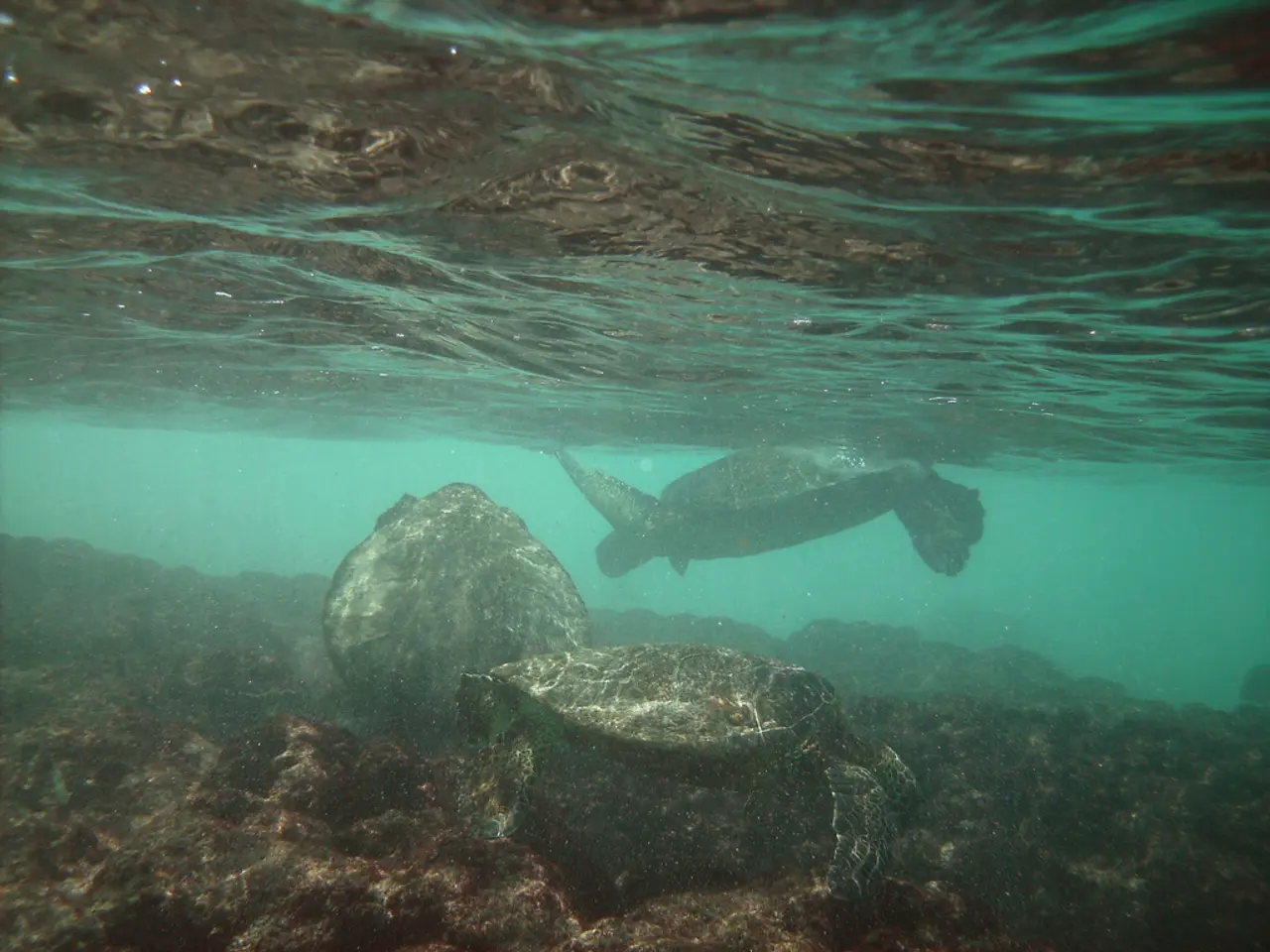
During hibernation, turtles utilize their cloacae, a multipurpose opening located near the tail, for respiration.
In the depths of winter, as nature lovers and scientists marvel at the resilience of overwintering turtles, a marvel of efficiency unfolds. Buried beneath the mud at pond bottoms, these ancient creatures rely on a unique process known as cloacal respiration, often called "butt breathing".
Cloacal respiration is a testament to evolution's ingenuity, allowing freshwater turtles like the white-throated snapping turtle and the painted turtle to extract oxygen from water while submerged, even when the surface is frozen solid. This process plays a vital role in their survival, enabling them to remain underwater and conserving energy in low-oxygen environments.
The cloaca, a single opening near the tail found in reptiles, birds, and some amphibians, serves as the turtle's lifeline during hibernation. Inside the cloaca, specialized sacs called bursae are covered in tiny blood vessels, facilitating gas exchange. Cloacal respiration works like underwater gills, exchanging oxygen with water through thin membranes.
As winter drags on, turtles slow down their metabolism, relying almost solely on cloacal respiration for oxygen. Nearly all of a turtle's oxygen during hibernation can come from this remarkable process. To conserve oxygen further, turtles drastically reduce their heart rate, sometimes dropping to one beat every nine minutes.
This slowing of physiological activity, combined with cloacal respiration, minimises oxygen use and allows turtles to survive extended winters underwater without breathing air directly. The painted turtle holds the record for surviving the longest under ice, sometimes up to 100 days without surfacing.
Understanding turtles' unique hibernation strategies is crucial for protecting turtle habitats, especially as climate change threatens to disrupt the delicate balance of these icy refuges. By appreciating the hidden marvels of nature, we can work towards preserving these ancient creatures and the vital roles they play in aquatic ecosystems, from controlling insect populations to serving as food for other animals.
So, the next time you pass by a frozen pond, consider the secret world beneath your feet, where ancient turtles wait out the winter using cloacal respiration, a testament to nature's creativity and hidden marvels.
- The evolution of cloacal respiration in freshwater turtles demonstrates nature's ingenuity, allowing them to extract oxygen from water during winter, even when the climate change-induced surface freezes solid.
- Recently, health-and-wellness advocates draw parallels from turtles' cloacal respiration, which helps conserve energy during hibernation, to the principles of fitness-and-exercise, such as efficiency and low-oxygen environment adaptation.
- The efficiency of cloacal respiration in turtles plays a significant role in counterbalancing the adverse effects of climate change on their habitats by ensuring their survival and maintaining the delicate balance within aquatic ecosystems.




