
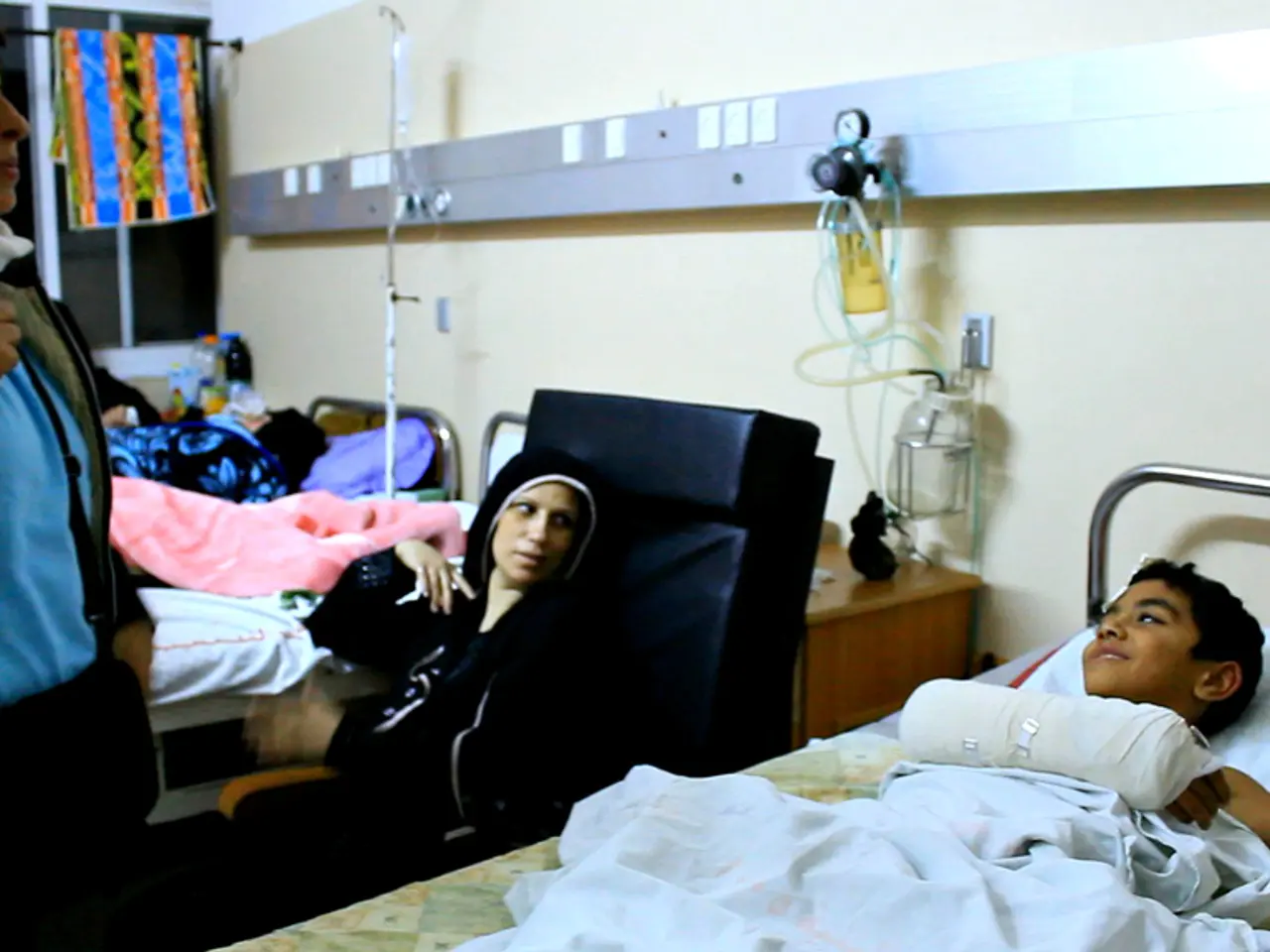
Emergency rooms shut down across the nation
In a concerning development, eight emergency departments across Portugal have closed their doors this Sunday, with seven of these closures happening in obstetrics and one in pediatrics. This is not an isolated incident, as the closure of emergency departments has become a recurring issue in the country.
Hospitals in Barreiro, Setúbal, Vila Franca de Xira, Santarém, Aveiro, and Leiria have seen their obstetrics emergency services shut down, while the pediatric emergency unit at Vila Franca de Xira Hospital has also been closed. These closures are primarily attributed to shortages in medical staff and resource constraints within the National Health Service (SNS) [1][4].
The staffing challenges in the SNS are compounded by the fact that many doctors work in both the public and private sectors, leaving fewer resources available for public emergency units [5]. As a result, patients are being directed to referenced emergency services, which only receive cases directed by emergency medical services (INEM) or the SNS 24 helpline. Health authorities are urging people to contact SNS24 before attending emergency departments to manage patient flow and ensure care continuity [1].
Proposed solutions to address these issues include improving the coordination of emergency cases through telephone triage (SNS24 line), optimizing workforce allocation by balancing NHS and private sector duties, and increasing public awareness and use of alternatives like referenced emergencies and telehealth services [1].
However, no specific long-term structural reforms have been detailed in the immediate reports, underscoring the need for health system investment in workforce expansion, better scheduling, and enhanced emergency care infrastructure to prevent such disruptions from becoming more frequent [1][5].
Medical representatives have identified these issues within the healthcare system and have expressed concerns about the slow pace of solutions being implemented [2]. As vacation periods approach, the phenomenon seems to intensify, further straining an already stretched healthcare system [3].
In summary, the closures in obstetric and pediatric emergency care are primarily due to staffing shortages and resource allocation issues within the SNS. Current mitigation efforts involve better emergency case management and public guidance, while emphasizing the need for systemic workforce and operational improvements in Portugal’s health service.
In the context of staffing shortages and resource constraints within Portugal's National Health Service (SNS), the science-backed solutions proposed aim to improve emergency case management and worker allocation, as well as increase public awareness and use of alternatives like referenced emergencies and telehealth services. However, ongoing concerns arise as these issues persist, potentially leading to more frequent disruptions in health-and-wellness services, such as obstetrics and pediatrics.




