
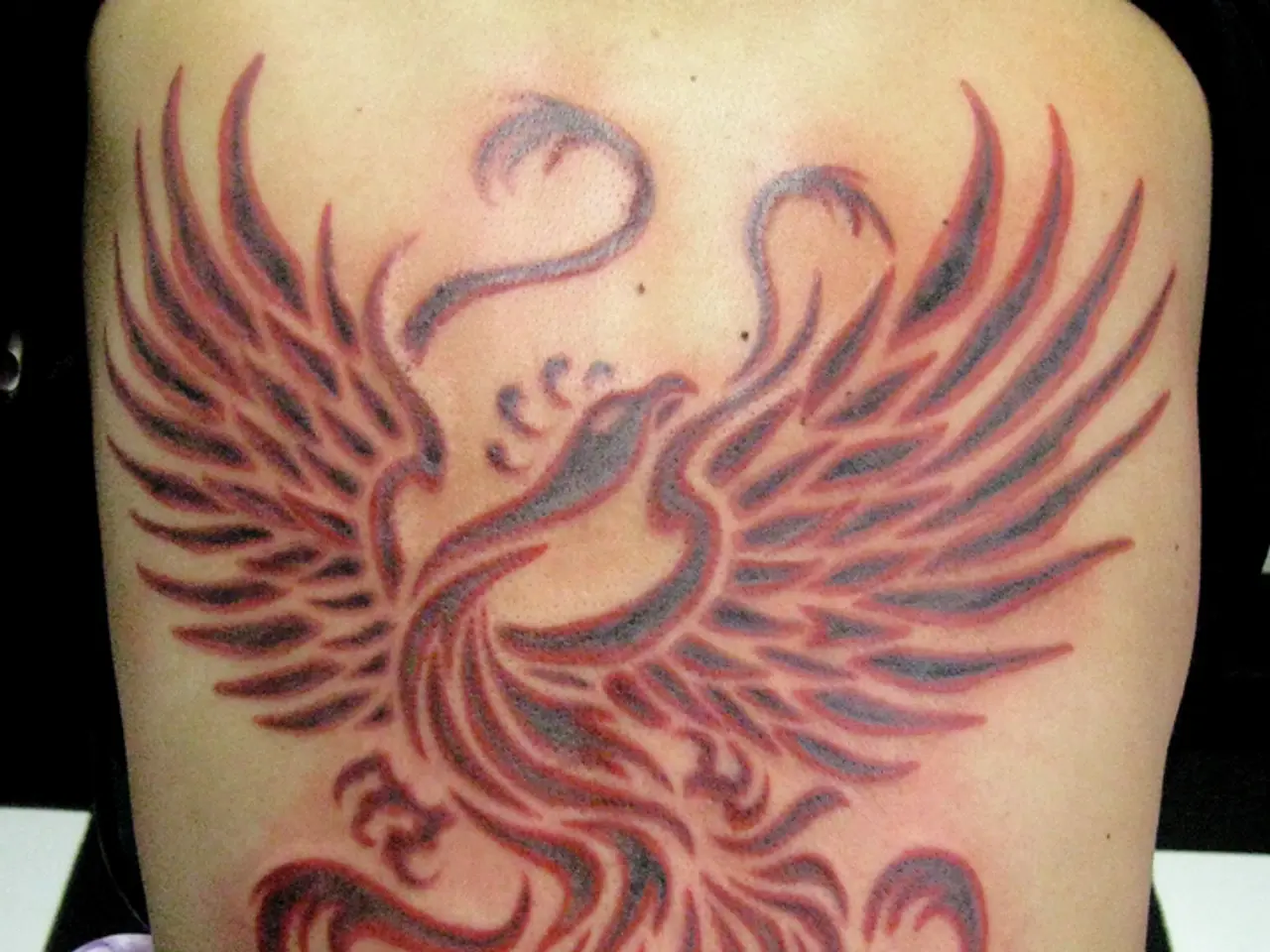
Experiencing Tattoo Sensations: Insights into Pain Levels, Points on the Body, and Soothing Methods
Tattooing, a popular form of body art, is a process that involves injecting ink into the dermis layer of the skin. While some people may find the experience relatively painless, others may find it quite intense. Several factors influence the level of pain experienced during a tattoo procedure.
**Factors Affecting Tattoo Pain**
1. **Placement on the Body:** Areas with thin skin, proximity to bones, or high nerve density tend to be more painful. For instance, ribs, collarbones, spine, fingers, toes, elbows, and knees are considered highly sensitive because the skin is thin and close to bone or packed with nerve endings.
2. **Skin Thickness:** Thicker skin (e.g., on the back or forearm) usually results in less pain compared to thinner skin areas such as ankles and wrists.
3. **Nerve Ending Concentration:** Areas like nipples, breasts, groin, fingers, and toes have a higher concentration of nerve endings, making tattooing more painful there.
4. **Fat and Muscle Cushioning:** More flesh cushions the needle impact, thus spots with more muscle or fat (e.g., outer arm, thigh, calf) are less painful compared to bony or leaner areas.
5. **Individual Pain Threshold and Mental State:** People’s pain tolerance varies. Anxiety or stress can heighten pain perception, while being relaxed can help reduce it.
6. **Tattoo Size and Complexity:** Larger or more intricate designs take longer and may increase discomfort over time.
7. **Artist’s Technique:** A skilled artist can lessen discomfort through technique and pacing.
8. **Other Factors:** Hydration, nutrition, time of day, temperature, session length, posture, and muscle tension all subtly affect pain.
**Body Areas Ranked by Sensitivity to Tattooing**
| Sensitivity Level | Body Areas | Notes | |-------------------|---------------------------------------|---------------------------------| | **Most Painful** | Ribs, spine, collarbones, fingers, toes, elbows, knees, groin, nipples, breasts, hips | Thin skin, close to bone, many nerve endings; sharp, intense pain reported. | | **Moderately Painful** | Back, chest, neck, abdomen, upper inner arm | Mixed thickness; more flesh but with some sensitivity. | | **Least Painful** | Outer upper arm, forearm, calf, thigh, shoulder | Thicker skin, more muscle/fat cushioning, fewer nerve endings. |
For first-time tattoo recipients, researching tattoo artists and parlors, ensuring proper hygiene and sterilization, and choosing an appropriate location can help minimize pain. Over-the-counter pain relievers like acetaminophen and ibuprofen may help with pain after tattooing, but their effectiveness for prevention is unclear.
It's important to note that the FDA has not approved any inks for tattooing and does not regulate practices in tattoo parlors. Tattoo pain is generally greater over thin skin, near bones, or on areas with dense nerve endings, while fleshier, well-padded regions tend to be less painful. Individual pain tolerance and mental state also strongly influence the experience.
[1] Smith, A. (2020). The Science of Tattoo Pain: A Comprehensive Guide. Retrieved from https://www.tattoodo.com/articles/the-science-of-tattoo-pain
[2] Johnson, K. (2018). How Much Does It Hurt to Get a Tattoo? Retrieved from https://www.healthline.com/health/how-much-does-it-hurt-to-get-a-tattoo
[3] Williams, M. (2019). The Truth About Tattoo Pain. Retrieved from https://www.allure.com/story/tattoo-pain-what-hurts-the-most
[4] Brown, L. (2017). The Most Painful Parts of the Body to Get a Tattoo. Retrieved from https://www.bustle.com/articles/189259-the-most-painful-parts-of-the-body-to-get-a-tattoo-according-to-people-who-have-gotten-tattoos-in-those-places
- Depression and anxiety can heighten the perception of pain during a tattoo procedure, suggesting a potential connection between mental health and the body's pain response in this context.
- Predictive science in health-and-wellness, particularly relating to the effects of exercise on skin-care, could provide insights into whether regular fitness and exercise might help manage tattoo pain by enhancing overall pain tolerance.
- Some individuals with Alzheimer's disease may have altered abilities to process pain, potentially making them less sensitive to the discomfort from tattooing due to changes in the nervous system.
- Proper nutrition plays a role in overall health and well-being, and a balanced diet could potentially impact an individual's pain tolerance during a tattoo procedure, making it a consideration for those planning to get a tattoo.
- The skincare routine adopted by a person before getting a tattoo might impact skin sensitivity, with a well-hydrated and nourished skin being less prone to discomfort during the tattooing process.




