
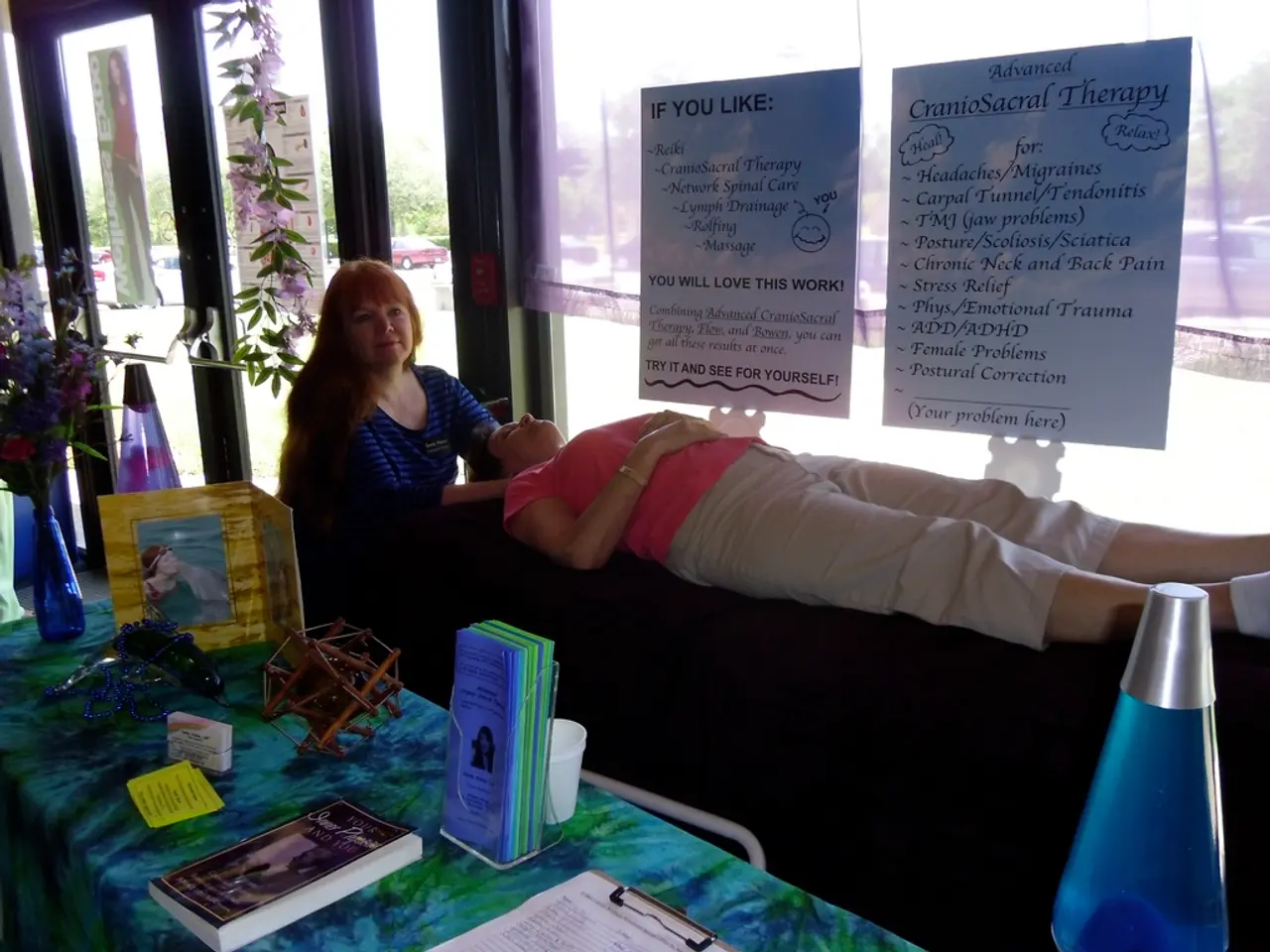
Massage-induced headaches: Understanding their cause and potential remedies
Headaches After Massage: Causes, Symptoms, and Treatments
Headaches are a potential side effect for some people after a massage. These headaches are often tension-type headaches linked to muscle tightness around the head and neck or stress-related triggers. Here's a closer look at the common causes, symptoms, treatments, and preventive measures for headaches following a massage.
Common Causes
Headaches following a massage can be caused by several factors, including dehydration, muscle tension and trigger points, sensitivity to irritants, blood pressure changes, and stress or poor posture.
- Dehydration: Loss of fluids before or during massage can cause headaches. Drinking lots of water before and after the massage is important to stay hydrated and reduce the risk of headaches.
- Muscle tension and trigger points: Tight muscles in the neck, jaw, and shoulders can radiate pain resulting in headaches.
- Sensitivity to irritants: Allergic reactions to massage environment elements—essential oils, fragrances, linens—may trigger headaches.
- Blood pressure changes: Massage can alter blood vessel constriction or dilation, influencing headache onset.
- Stress and posture: Stress-related headaches and poor posture during or after massage could contribute.
Typical Symptoms
Typical symptoms include dull, aching pain or sharp headaches that may be localized around the head, neck, or radiating from trigger points in muscles supporting the head, such as suboccipital muscles, trapezius, and sternocleidomastoid.
Treatments
Treatments for headaches after a massage may include:
- Hydration: Drinking sufficient water before and after massage to prevent dehydration-related headaches.
- Muscle relaxation: Massage techniques targeting trigger points in neck and shoulder muscles to relieve muscle tension and improve blood flow.
- Self-care massages: Gentle scalp massage with possible use of soothing essential oils like lavender or peppermint may alleviate tension headaches.
- Medication: Over-the-counter pain relievers (NSAIDs) or muscle relaxants can help manage pain when appropriate.
- Physical therapy integration: Combining massage with physical therapy or spinal mobilization may provide enhanced relief, especially in cases like occipital neuralgia.
- Professional consultation: If headaches persist, consulting a healthcare professional is advised to rule out other causes and consider additional therapies such as acupuncture or more advanced interventions.
Preventive Measures
Preventive efforts include:
- Maintain hydration: Drink water regularly before and after massages.
- Manage stress: Use relaxation techniques such as deep breathing, meditation, yoga or massage to reduce stress-related tension headaches.
- Good posture: Avoid neck strain by maintaining proper posture during daily activities.
- Regular gentle exercise: Moderate physical activity to improve circulation and reduce muscle tension.
- Avoid allergens/irritants: Inform the massage therapist of any sensitivities to oils, fragrances, or products so alternatives can be used.
- Consistent sleep patterns: Ensure regular, restful sleep to minimize hormonal or fatigue-related headache triggers.
- Identify individual triggers: Keep a headache diary to recognize and avoid personal headache triggers such as foods, odors, or environmental changes.
Additional Tips
- Asking the masseuse to use unscented oils and to avoid perfumes in the room can help prevent headaches for people sensitive to scents.
- Allergies to the oils used during a massage may be associated with sinus headaches and migraines.
- Too much pressure during a massage can cause a pressure headache.
- The American Migraine Foundation (AMF) recommends a combination of over-the-counter (OTC) pain relief, rest, and drinking water to combat headaches after massage therapy.
- The National Health Service (NHS) suggests resting for a short while following a massage if dizziness accompanies the headache.
- Telling the massage therapist about any medical conditions that could cause headaches can help reduce the risk of experiencing a headache after massage.
- Avoiding alcohol before and after the massage can decrease the likelihood of getting a headache.
- Dehydration, muscle tension and trigger points, sensitivity to irritants, blood pressure changes, stress, and poor posture are common causes of headaches following a massage.
- Symptoms of headaches after a massage can include dull, aching pain or sharp headaches, localized around the head, neck, or radiating from trigger points in muscles supporting the head.
- Treatments for headaches after a massage may involve hydration, muscle relaxation, self-care massages, medication, physical therapy integration, professional consultation, and preventive measures such as maintaining hydration, managing stress, good posture, regular gentle exercise, avoiding allergens/irritants, consistent sleep patterns, and identifying individual triggers.
- Additional tips for preventing headaches after massage therapy include using unscented oils, resting for a short while if dizziness accompanies the headache, telling the massage therapist about any medical conditions, and avoiding alcohol before and after the massage. Other alternatives in therapy include acupuncture, which may be considered if headaches persist after trying conventional treatments.




