
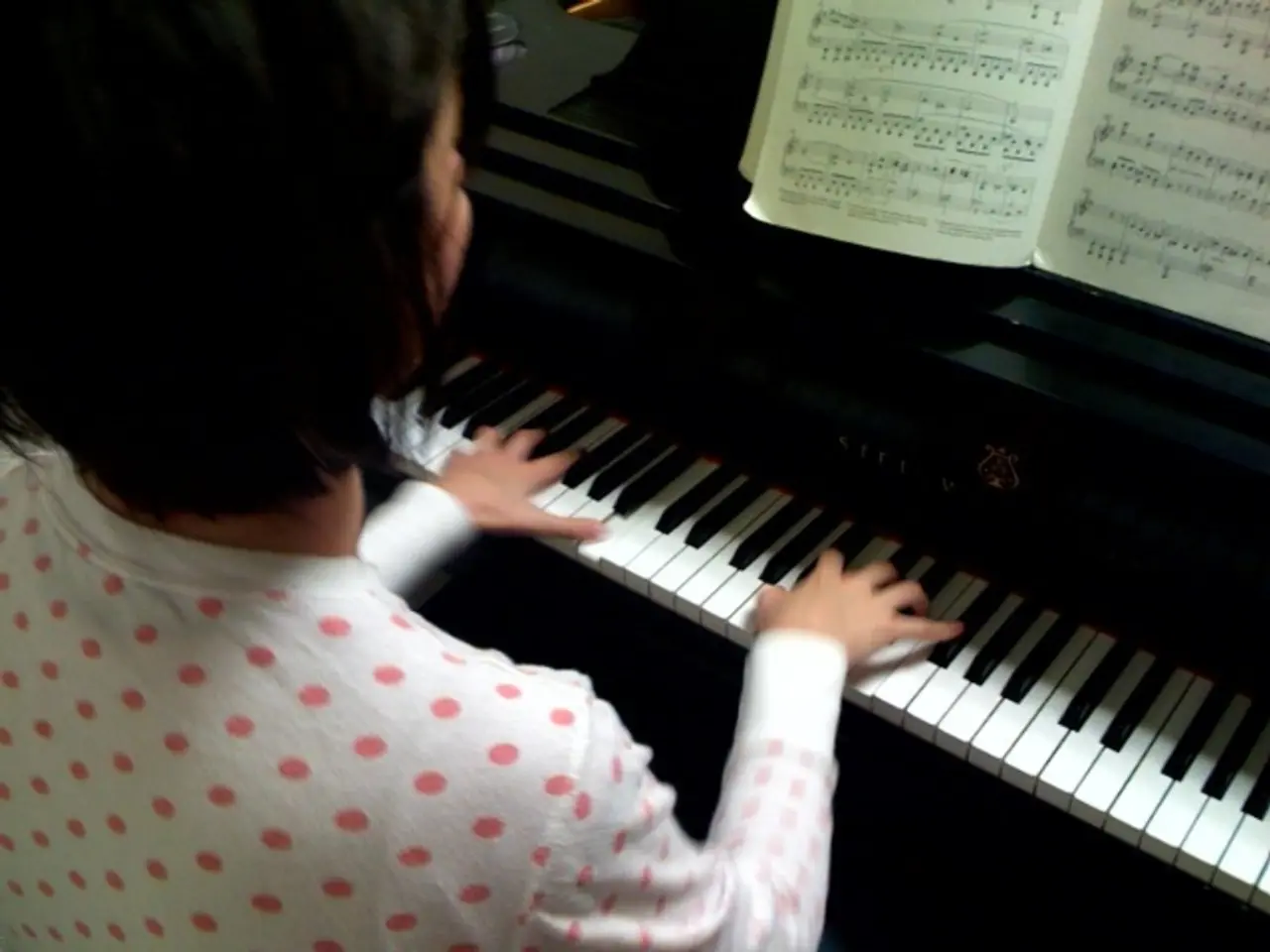
Master Piano Performance Anxiety: Extensive Handbook
In the world of music, piano recitals can be a nerve-wracking experience for even the most seasoned performers. However, it's important to remember that anxiety is not a testament to one's skills or a prediction of how well the performance will go; it's simply adrenaline pumping you up before you act.
Some musicians treat their instrument as a trusted ally, talking to it before the performance. Others have a specific pre-show meal that they believe brings good luck and calms their nerves. Preparation is crucial, with long hours spent perfecting every note and chord to make the piece feel like an extension of the performer.
Beyond preparation, visualization, controlled breathing, and positive affirmations, piano players use several additional strategies to manage performance anxiety. Cognitive Behavioral Therapy (CBT) helps musicians identify and challenge irrational fears and negative thought patterns related to performance, reframing them to reduce anxiety impact. Simulated performance practice, playing in front of friends, family, or small audiences before the actual event, helps acclimate the body and mind to performance conditions, lowering stress during the real performance.
Mind-body somatic approaches, such as the Alexander Technique, Feldenkrais Method, Yoga, Tai Chi, Pilates, and Qigong, improve body awareness, promote natural movement, reduce tension, and can lower anxiety by creating a healthier mind-body connection. Bodymind listening and emotional release techniques help performers tune into bodily sensations, allowing them to release emotional energy, reduce stress, and break limiting mental patterns contributing to anxiety.
Lifestyle management, including maintaining adequate sleep, healthy diet, and regular exercise, supports overall mental health and reduces anxiety vulnerability. Acceptance of anxiety, recognizing it as a natural part of performing and not fighting it, can decrease its power and help performers stay focused. Exposure therapy, gradually and repeatedly facing the performance situation (or visualizing it intensely), reduces fearful responses by "desensitizing" the anxiety trigger.
A music performance contract can help prevent situations arising from fear of failure by outlining terms and conditions of the performance. Fear of damaging reputation can overshadow a pianist's love for music, as they worry about losing future opportunities or falling out of favor in their professional circles due to a single flawed performance. Fear of failure is a common anxiety trigger, characterized by the fear of making mistakes, forgetting the piece, or experiencing a complete breakdown on stage. Fear of judgment is a significant stressor, as performers worry about living up to audience expectations and being harshly criticized for minor lapses.
Some pianists practice unusual warm-up routines, such as playing a particular scale or piece repeatedly, performing hand gymnastics, or juggling tennis balls. Others engage in calming activities like yoga or meditation before a performance. Some even wear a particular piece of clothing or accessory as a good luck charm.
In London and online worldwide, WKMT offers exceptional piano lessons, providing a supportive environment for musicians to grow and manage their performance anxiety effectively. Every piano key, every sound wave, every heartbeat is an opportunity for you to share your gift of music with the world. Embrace the nervous energy, transform it into a driving force for rooted, compelling performances, and let your music speak for itself.
[1] Goldstein, J. S., & Winner, E. (2012). The Oxford handbook of musical cognition. Oxford University Press. [2] Antony, M. M., & McCabe, L. B. (2009). Anxiety and anxiety-related disorders. Guilford Press. [3] Davidson, J. R. T., & Ironson, G. (2019). Mind-body interventions for health: theory, mechanism, and applications. Guilford Press. [4] Linehan, M. M. (1993). Cognitive-behavioral treatment of borderline personality disorder. Guilford Press.
A composer might find solace in mind-body somatic approaches, such as the Alexander Technique, Yoga, or Pilates, during piano lessons to improve body awareness, reduce tension, and lower anxiety before a performance. Embracing lifestyle management, like maintaining adequate sleep, healthy diet, and regular exercise, supports overall mental health and can help manage performance anxiety.




