
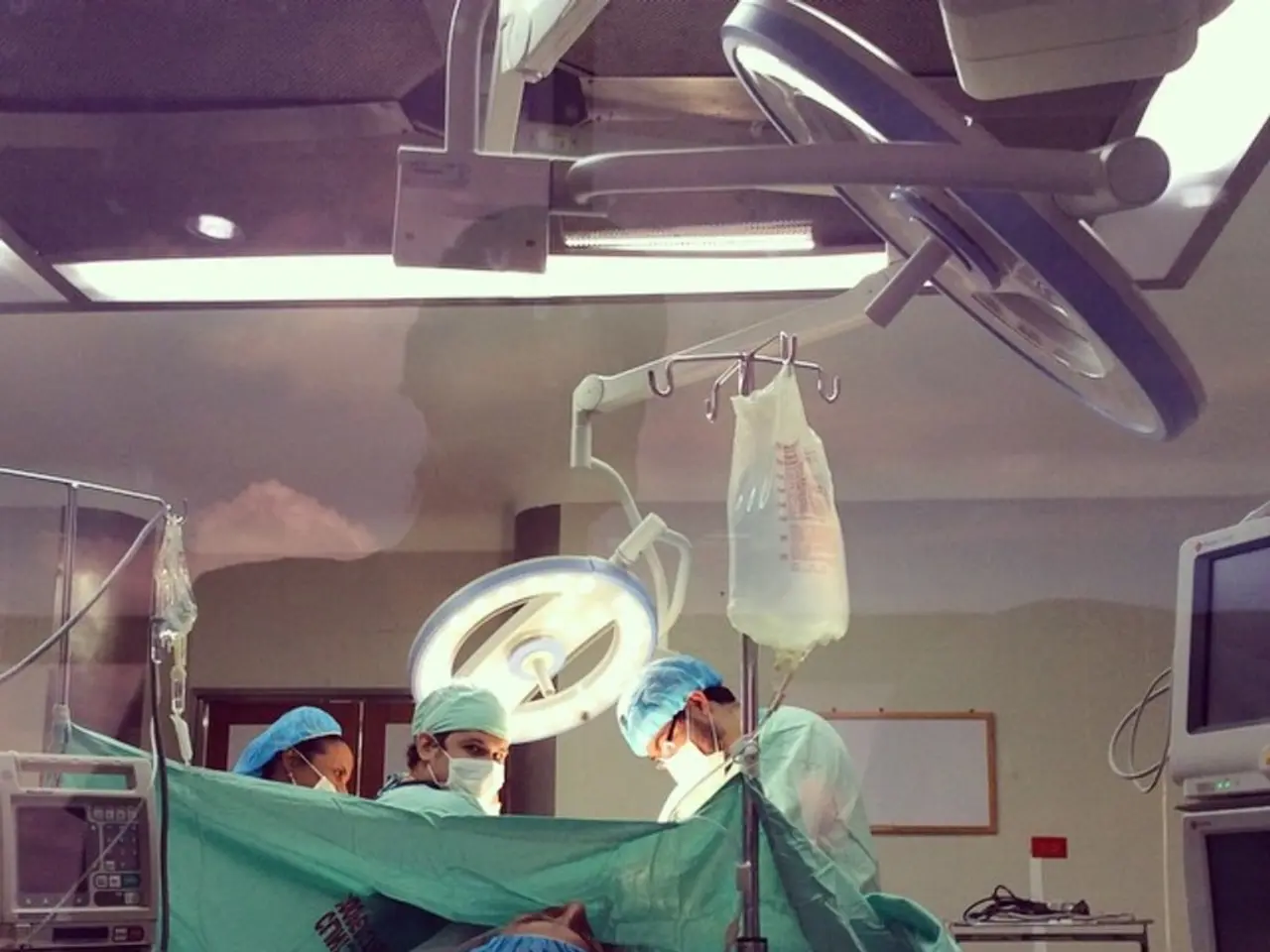
Medical Process Explanation: Objective, Preparation, Steps, and Recovery for Endoscopic Gastrostomy Directive
An EGD, or esophagogastroduodenoscopy, is a common medical procedure used to examine the esophagus, stomach, and upper small intestine (duodenum). Here's a breakdown of what you can expect from an EGD procedure, its key differences from other endoscopic procedures, and what you need to know before and after the procedure.
Preparing for an EGD Procedure
Before an EGD, your doctor will provide instructions that may include avoiding eating or drinking 6-8 hours before the procedure, stopping certain medications, and informing the medical team about supplements, vitamins, or allergies to medications.
The EGD Procedure
During the EGD, a medical professional will administer a sedative medication, monitor your vital signs, spray numbing medication at the back of your throat, and guide an endoscope—a flexible tube with a camera—into your esophagus, stomach, and small intestine. If necessary, they may take fluid or tissue samples for further analysis.
After the EGD Procedure
Following the EGD, you will be transferred to the recovery area. The healthcare team may instruct you to avoid eating or drinking until your gag reflex returns to reduce the risk of choking.
For the first few days after the procedure, you may experience a sore throat when swallowing. Over-the-counter pain relief, after consulting with your doctor, can help alleviate this discomfort.
Potential Complications
Although the risk of complications during or following an EGD procedure is low, it's essential to be aware of potential complications such as bleeding from biopsy areas, perforation of the lining of the upper GI tract, and adverse effects from the sedation medication.
Scheduling and Results
A surgeon may discuss diagnostic results on the same day as the EGD procedure, or they may schedule another appointment, especially if they need to await the results of a biopsy. Biopsy results are usually available within a few days.
Key Differences with Other Endoscopic Procedures
While EGD shares similarities with other endoscopic procedures like colonoscopy, colposcopy, hysteroscopy, and cystoscopy, there are key differences:
- Organs Examined: EGD focuses on the esophagus, stomach, and upper small intestine, while colonoscopy examines the large intestine, colposcopy the cervix and vagina, hysteroscopy the uterine cavity, and cystoscopy the urinary bladder and urethra.
- Entry Path: EGD involves insertion through the mouth to access the upper digestive tract; colonoscopy enters via the anus to view the colon. Colposcopy and hysteroscopy enter through the vagina and cervix; cystoscopy through the urethra.
- Sedation and Preparation: EGD and colonoscopy often require sedation and bowel preparation, while colposcopy and hysteroscopy generally do not require extensive preparation but depend on the comfort and clinical context.
When is an EGD Recommended?
Doctors may recommend an EGD procedure to help determine the cause of GI symptoms such as chronic heartburn, nausea and vomiting, and unexplained weight loss. An EGD procedure is an endoscopic procedure that allows a doctor to diagnose and treat conditions of the upper GI tract.
Arrangements for Your EGD Procedure
Remember, it's crucial to arrange for someone else to drive you home after the EGD procedure, as you will likely be under sedation.
[1] American Cancer Society. (2021). Colonoscopy. Retrieved from https://www.cancer.org/cancer/colon-rectal-cancer/detection-and-screening/colonoscopy.html [2] Mayo Clinic. (2021). Esophagogastroduodenoscopy (EGD). Retrieved from https://www.mayoclinic.org/tests-procedures/esophagogastroduodenoscopy/about/pac-20384824 [4] National Library of Medicine. (2021). Endoscopy. Retrieved from https://medlineplus.gov/ency/article/003405.htm [5] National Institute of Diabetes and Digestive and Kidney Diseases. (2021). Colonoscopy. Retrieved from https://www.niddk.nih.gov/health-information/digestive-diseases/colonoscopy
- In the realm of medical-conditions that affect digestive-health, an EGD is particularly useful for diagnosing issues in the esophagus, stomach, and small intestine, such as chronic heartburn, nausea, vomiting, and unexplained weight loss.
- Other endoscopic procedures, like colonoscopy, colposcopy, hysteroscopy, and cystoscopy, differ from EGD in terms of the organs they examine, their entry paths, and the necessary preparations and sedation levels.
- To ensure a smooth and safe EGD procedure, it's essential to adhere to your doctor's instructions for preparing, which may involve avoiding food and drinks, ceasing certain medications, and providing information about supplements, vitamins, or allergies to medications.




