
Most Dangerous Marine Life: Ranking the Most Perilous Sea Creatures
In the vast, mysterious depths of the ocean, there exists a world teeming with life, beauty, and danger. Among the most fascinating and potentially harmful creatures are the top 10 deadliest ocean animals. These include the Box Jellyfish, Great White Shark, Saltwater Crocodile, Blue-Ringed Octopus, Tiger Shark, Bull Shark, Textile Cone Snail, Weever Fish, Stingray, and Stonefish [1][3][4][5].
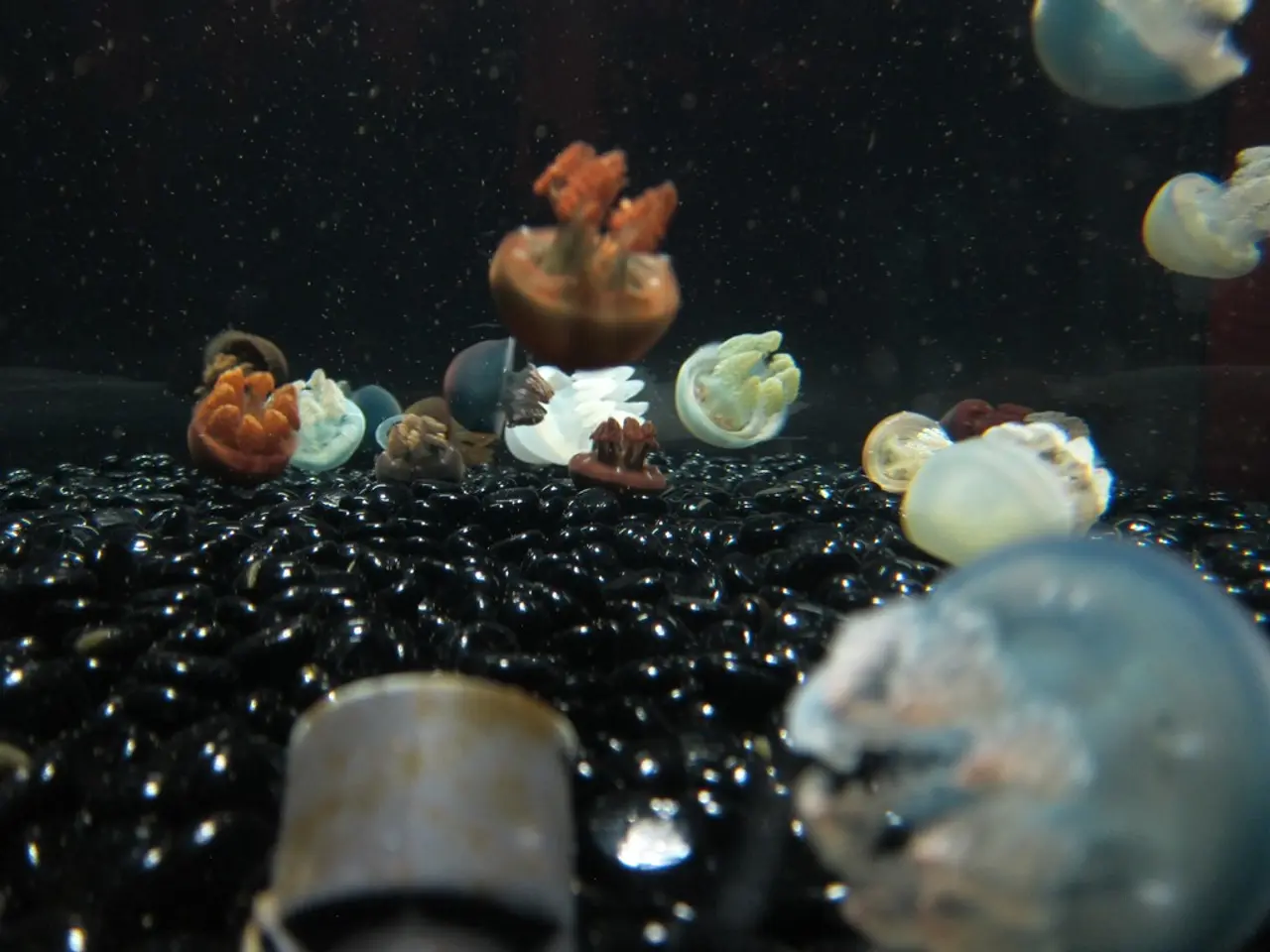
The Box Jellyfish, with its venom capable of causing heart failure and death, tops the list. The Great White Shark, responsible for most fatal shark attacks, comes next. The Saltwater Crocodile, the strongest biter in the animal kingdom, follows closely. The Blue-Ringed Octopus, whose venom can lead to paralysis and death, is another formidable adversary.
The Tiger Shark, named for its distinctive stripes, is an infamous oceanic predator. The Lionfish, recognised by its vibrant stripes and elongated fins, is a venomous marine species. Both serve as reminders of the raw power, mystery, and intricacies of nature that dwell beneath the waves.
However, understanding these creatures better can help appreciate their place in the ocean's grand tapestry and strive to ensure their survival. Many of these dangerous marine species are at risk due to pollution, climate change, and human activities [6].
To minimise risk when in oceans known to harbour dangerous marine life, safety precautions are essential. These include avoiding contact or provocation, wearing protective gear, shuffling feet in sandy areas, staying alert, avoiding swimming at dawn/dusk, avoiding swimming near fishing activity or seals, keeping distance from saltwater crocodiles, seeking immediate medical attention if stung or bitten, and never swimming alone [2][4].
The Portuguese Man-of-War, despite its jellyfish-like appearance, is a siphonophore - an animal made up of a colony of organisms. Knowledge about these dangerous marine species and having first aid and CPR courses can help minimise potential risks.
Respect and caution should be practiced when encountering these oceanic predators. As visitors in the homes of these creatures, it's important to respect their space and coexist with them harmoniously. In case of a Tiger Shark attack, try to stay calm, defend yourself by hitting the shark's eyes or gills, and seek immediate medical attention.
Conservation of these dangerous marine species is crucial due to their vulnerability to pollution, climate change, and human activities. By adhering to safety precautions and respecting these creatures, we can help ensure their survival and continue to marvel at the wonders of the ocean.
References: [1] https://www.nationalgeographic.org/encyclopedia/box-jellyfish/ [2] https://www.reefquestcenter.org/blog/2020/08/14/stingray-sting-first-aid [3] https://www.nationalgeographic.org/encyclopedia/great-white-shark/ [4] https://www.nationalgeographic.org/encyclopedia/saltwater-crocodile/ [5] https://www.nationalgeographic.org/encyclopedia/blue-ringed-octopus/ [6] https://www.nationalgeographic.org/encyclopedia/tiger-shark/ [6] https://www.nationalgeographic.org/encyclopedia/lionfish/
- In the realm of medical science, understanding the health-and-wellness implications of medical-conditions caused by venomous sea creatures is crucial for ensuring our safety when interacting with dangerous marine species.
- The vast field of space-and-astronomy can learn from the adaptability and survival strategies exhibited by ocean animals like the Box Jellyfish, as they share similar challenges in extreme environments.
- For health-and-wellness practitioners focusing on medical-conditions, gaining knowledge about potential hazards faced by individuals engaging in ocean activities, such as encounters with venomous marine species, could provide valuable insights for developing preventive measures and treatments for envenomation.




