
Optimal Juice Picks: Selection and Beyond
Fruit juices, a popular beverage choice for many, offer a range of potential health benefits. However, it's essential to understand the nutritional content and potential risks associated with different types of juices.
The carbohydrate and sugar content in a serving of juice can vary significantly depending on the type. For instance, a serving of pure, fresh-pressed beet juice provides 23g of total sugars and 20g of carbohydrates, while a serving of unsweetened apple juice contains 23.9g of total sugars and 28g of carbohydrates. The nutritional content of canned tomato juice and the specific vitamin C content of various juices are not provided in the text.
One of the key benefits of fruit juices is their rich source of antioxidants. Blueberries, for example, are a rich source of anthocyanins, which may protect against oxidative stress, DNA damage, and cancer cell proliferation. Similarly, beet juice contains nitrates, antioxidants, and essential nutrients, and may reduce blood pressure, blood glucose, improve vascular function, and protect the kidneys.
Tomatoes, not typically considered a juice, are a rich source of lycopene, a beneficial compound for cardiovascular health. Cranberry juice, another type of juice, may reduce urinary tract infections, particularly in individuals with recurrent infections.
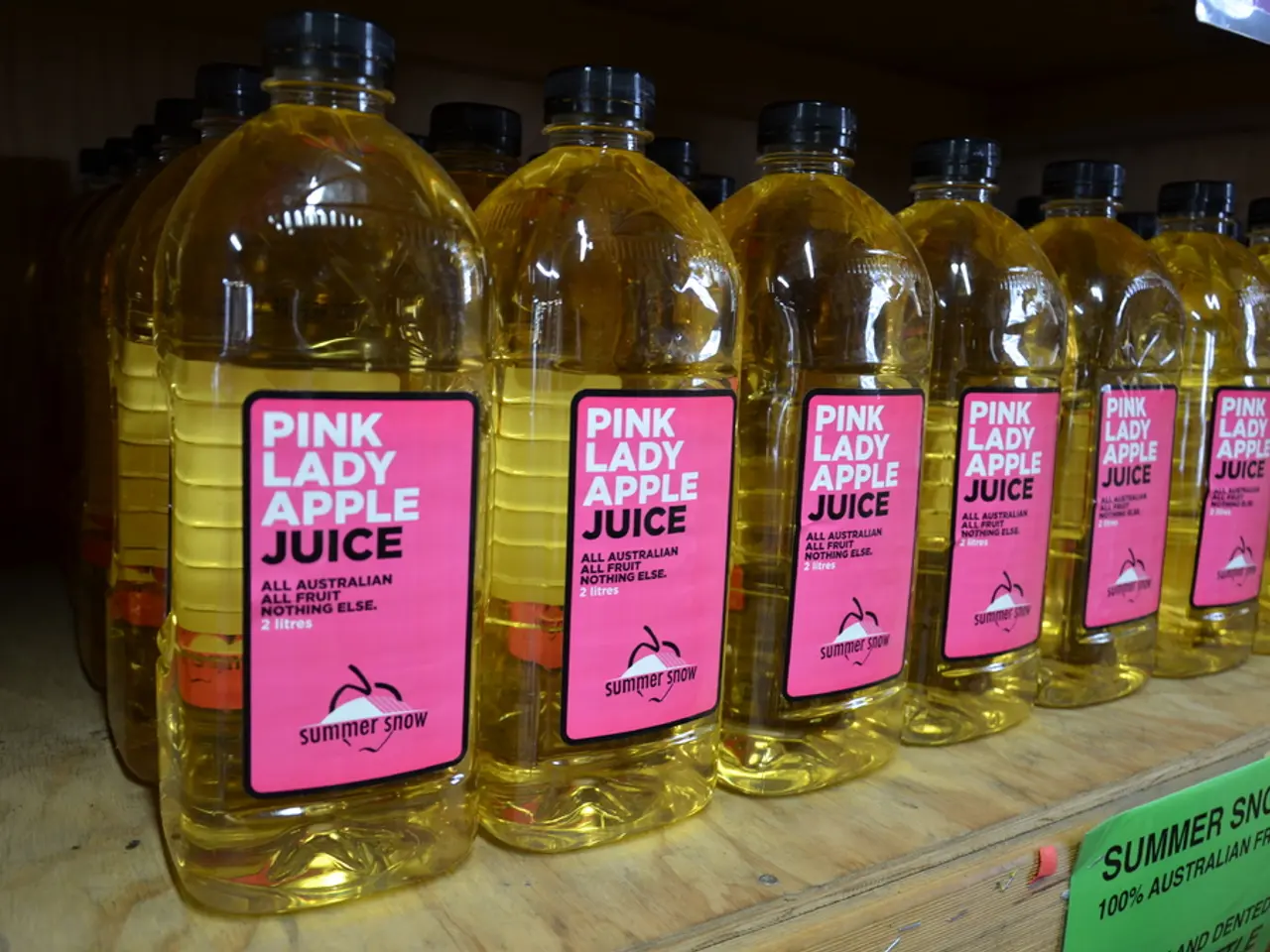
Consuming different types of fruit juices can help in achieving the recommended daily intake of fruits and vegetables. However, it's important to note that juices generally have lower fiber content than whole fruits. This reduces their satiety and blood sugar regulation benefits. For instance, apples provide polyphenols and may support a healthy microbiome, with cloudy apple juice having a higher polyphenol content than clear apple juice.
Despite these benefits, fruit juices also pose some risks. High sugar content can contribute to obesity, diabetes, and dental enamel erosion, especially when consumed frequently or sipped over long periods. Added sugars in packaged juices can exacerbate these risks. There are also safety concerns with unpasteurized juices, which may harbor harmful bacteria, and potential contamination with pesticides or heavy metals in some apple juices.
People with specific health conditions such as diabetes or kidney disease should consume fruit juices cautiously and seek personalized advice from healthcare providers.
In summary, moderate consumption of 100% fruit juices without added sugars can provide nutrients and antioxidants but does not replace whole fruits' benefits, mainly due to lower fiber. Overconsumption raises risks related to sugar intake, dental health, and potential contamination, warranting careful selection and moderation.
[1] Nutrition.gov. (2021). Fruit Juice. [online] Available at: https://www.nutrition.gov/nutrition-education/better-choices-better-health/better-choices-better-health-fruit-juice
[2] American Heart Association. (2021). Fruit Juice. [online] Available at: https://www.heart.org/en/healthy-living/healthy-eating/eat-smart/fruits/fruit-juice
[3] Harvard T.H. Chan School of Public Health. (2021). Fruit Juice. [online] Available at: https://www.hsph.harvard.edu/nutritionsource/what-should-you-eat/fruit/fruit-juice/
[4] Centers for Disease Control and Prevention. (2021). Sugary Drinks and Your Health. [online] Available at: https://www.cdc.gov/healthyweight/healthy_eating/limit_sugars/sugary-drinks.html
[5] World Health Organization. (2021). Sugar intake for adults and children. [online] Available at: https://www.who.int/news-room/q-a-detail/sugar-intake-for-adults-and-children
- People seeking weight loss and healthy diets need to carefully consider the calorie and carbohydrate content of fruit juices, as a serving of unsweetened apple juice contains 23.9g of total sugars and 28g of carbohydrates.
- For a balanced health-and-wellness approach, it's crucial to understand that 100% fruit juices without added sugars can provide nutrients and antioxidants, but they may not offer the same benefits as whole fruits in terms of fiber content.
- Science reveals that beet juice, rich in nitrates, antioxidants, and essential nutrients, may help reduce blood pressure and protect the kidneys, making it a valuable addition to a healthy-diets plan.




