
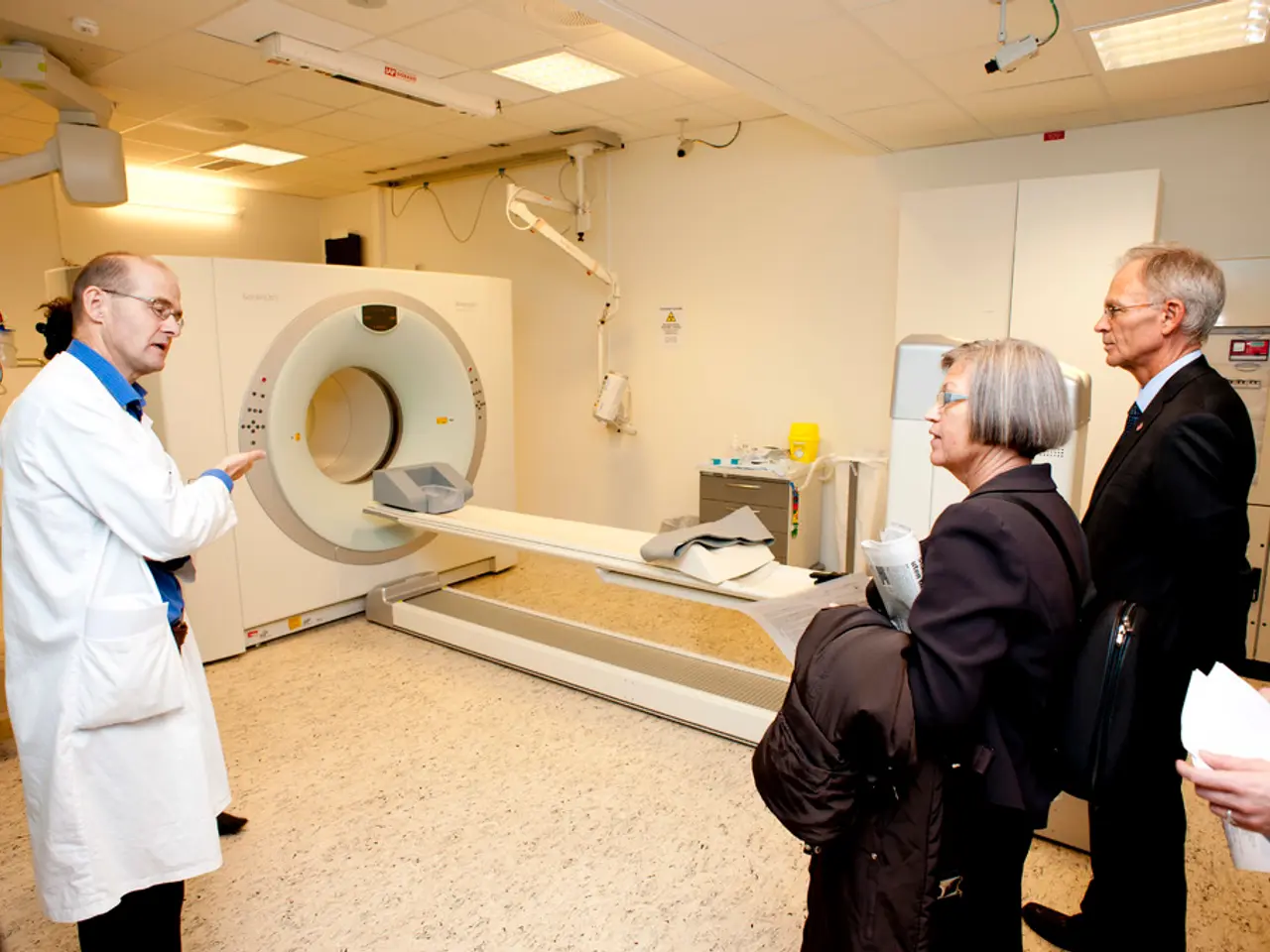
Remote Healthcare Services Widen Their Reach in Less populated Regions
Transforming Healthcare in Rural America: The Telemedicine Revolution
The COVID-19 pandemic has accelerated the adoption of telemedicine in rural hospitals, offering a promising solution to maintain healthcare access amidst lockdowns and reduce virus exposure risks. This shift, driven by expanded regulatory flexibilities, enhanced funding, and policy changes, has the potential to revolutionize healthcare access in remote regions.
Before the pandemic, rural hospitals like WVU Medicine had small direct-to-consumer telehealth programs. However, the necessity to scale up telemedicine infrastructure was evident, as telehealth use grew as a primary mode of care for rural and remote populations. Factors such as long travel distances to providers, high travel costs, and intermittent availability of face-to-face services made telemedicine an attractive option.
The pandemic led to rapid policy shifts by agencies like the CMS, which expanded telehealth reimbursement and waived location restrictions, significantly increasing rural telehealth utilization during the public health emergency. Telemedicine was often used for after-hours care, follow-ups, and as a hybrid model alongside in-person visits.
Despite a high broadband coverage nationally, rural areas sometimes face connectivity challenges and barriers like digital literacy and cultural preferences that affect telemedicine adoption. Nevertheless, the potential long-term impacts on healthcare access in rural and remote regions are promising.
Sustained hybrid care models may improve regular access to general practitioners, reducing travel burden and enhancing continuity of care. Continued federal investments and programs aim to address infrastructure gaps and support telemedicine sustainability. Advanced initiatives, such as ARPA-H’s PARADIGM program, are exploring mobile, technology-rich clinics to deliver hospital-level services directly in rural areas.
To maximize impact, telehealth models will need cultural and linguistic tailoring, additional support staff, and consideration of local context. Healthcare professionals show increasing readiness to implement telemedicine, signaling potential for scaling these services effectively.
In West Virginia, WVU Medicine established regional clinic hubs throughout the state that provide virtual access to specialists. They also provide telemedicine access through local fire departments and schools. The number of telemedicine visits at WVU Medicine increased from 25 in all of 2019 to 50,000 in April 2020 alone.
St. John's Health, based in Jackson, Wyoming, launched a curbside telehealth program during the pandemic, where patients could drive up to clinics, and nurses would hand them Apple iPad devices with Zoom videoconferencing software. The number of telemedicine patients at St. John's Health increased from 35 in February to 2,169 in April and further to 1,127 in November.
Patient demand for telemedicine has soared in the past year due to concerns about COVID-19 exposure. As we move forward, it is crucial to overcome remaining infrastructure, digital literacy, and cultural barriers to realize the full potential of these long-term benefits.
[1] Centers for Disease Control and Prevention. (2020). Telehealth during COVID-19. Retrieved from https://www.cdc.gov/coronavirus/2019-ncov/hcp/telemedicine.html
[2] Health and Human Services. (2020). Telehealth during the COVID-19 pandemic. Retrieved from https://www.hhs.gov/coronavirus/community-by-community-health-care/index.html
[3] National Rural Health Association. (2020). Telehealth in rural America. Retrieved from https://www.ruralhealthweb.org/telehealth-in-rural-america
[4] Rural Health Information Hub. (2020). Telehealth in rural America. Retrieved from https://www.ruralhealthinfo.org/topics/telehealth
Telemedicine, with its potential to revolutionize healthcare access in remote regions, has become a crucial aspect of health-and-wellness initiatives in rural America. The increase in telemedicine usage, driven by expanded regulatory flexibilities and policy changes, aims to address issues like long travel distances, high travel costs, and intermittent availability of face-to-face services, thereby enhancing science-backed healthcare delivery in these regions.




