
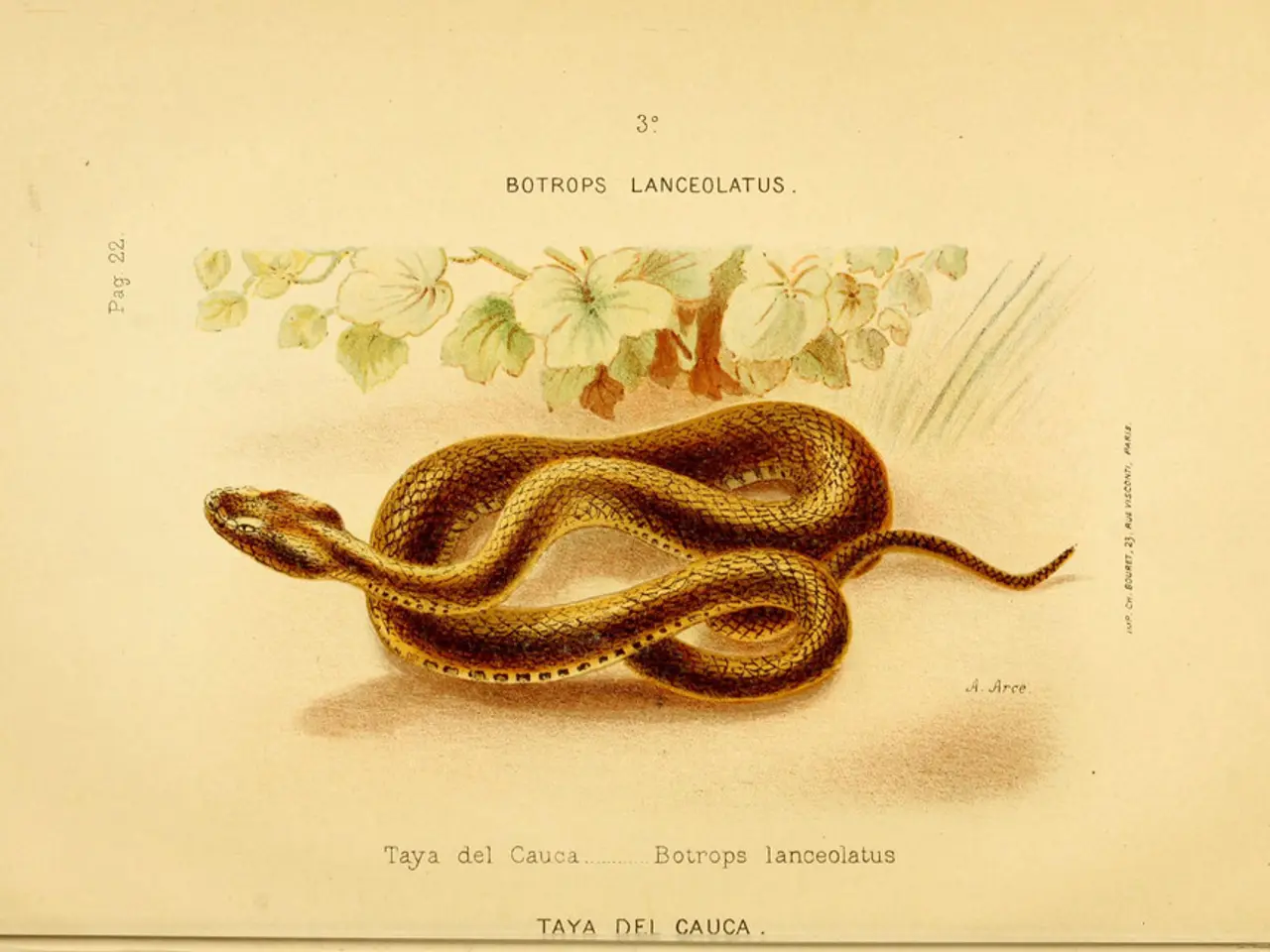
Researcher Treads on Multiple Venomous Serpents to Find Potential Life-Saving Discoveries
The behavior of the jararaca, a venomous pit viper commonly found in South America, has been the subject of a recent study published in the journal Scientific Reports. This research focuses on the snakes' defensive behaviors, which play a crucial role in snakebite incidents.
According to the study, the defensive behavior of jararacas is influenced by both intrinsic factors—such as size, sex, and life stage—and environmental factors like temperature and time of day. Smaller snakes, especially newborn females, are more prone to biting defensively. Warmer temperatures also increase the likelihood of a bite.
This directly relates to the risk of snakebite incidents, as bites are more likely under certain conditions such as during hot weather and when encountering younger, smaller snakes. Hikers and locals are advised to be particularly cautious in warmer times of the day and year, and to watch out for smaller, more defensive juvenile snakes which are likelier to bite.
The study highlights the need for further research on the defensive behaviors of venomous snake species in different regions. It found that contact on the head of a jararaca significantly increased the probability of a bite compared to the midbody or tail.
The researchers used a booted foot with a foam reinforcement to protect the snakes instead of the initially approved metal hook due to concerns about injury to the snakes' mouths. Despite some controversy, the paper was retracted in March 2025 due to a "communication error" by the ethics committee regarding the approved methods for handling the snakes.
The jararaca's venom causes excruciating pain, life-threatening bleeding, and kidney failure. Understanding the ecological and behavioral factors influencing snakebite can enhance prediction and prevention strategies. For instance, in regions where Bothrops jararaca is common, awareness of these factors can help reduce the risk of snakebite incidents.
In summary, the study provides valuable insights into the defensive behavior of jararacas. Smaller size, female sex, and juvenile life stages increase aggressiveness. Higher temperatures and time of day influence defensive behavior, affecting the likelihood and frequency of defensive strikes, thereby impacting snakebite risk. Snakebites are a high-priority neglected tropical disease, classified by the World Health Organization, and further research in this area is essential to improve prevention strategies and save lives.
- The ecology and behavior of venomous snakes like the jararaca are crucial for health-and-wellness, particularly when it comes to understanding and preventing medical-conditions such as snakebites.
- The defensive behaviors of venomous snakes like the jararaca are influenced by both intrinsic factors (such as size, sex, and life stage) and environmental factors (like temperature and time of day).
- A recent study published in Scientific Reports focused on the jararaca's defensive behaviors, revealing that smaller snakes, especially newborn females, are more prone to biting defensively under warmer temperatures.
- This research in ecology contributes to science by providing insights into the behavior of venomous snakes and enhancing prediction and prevention strategies, especially regarding the risk of snakebite incidents.
- Hikers and locals are advised to Be cautious in warmer times of the day and year, and watch out for smaller, more defensive juvenile snakes which are likelier to bite, as part of health-and-wellness protocols.
- Further research on the defensive behaviors of venomous snake species in different regions is essential for improving fitness-and-exercise routines and preventing snakebites, which are a high-priority neglected tropical disease, classified by the World Health Organization.




