
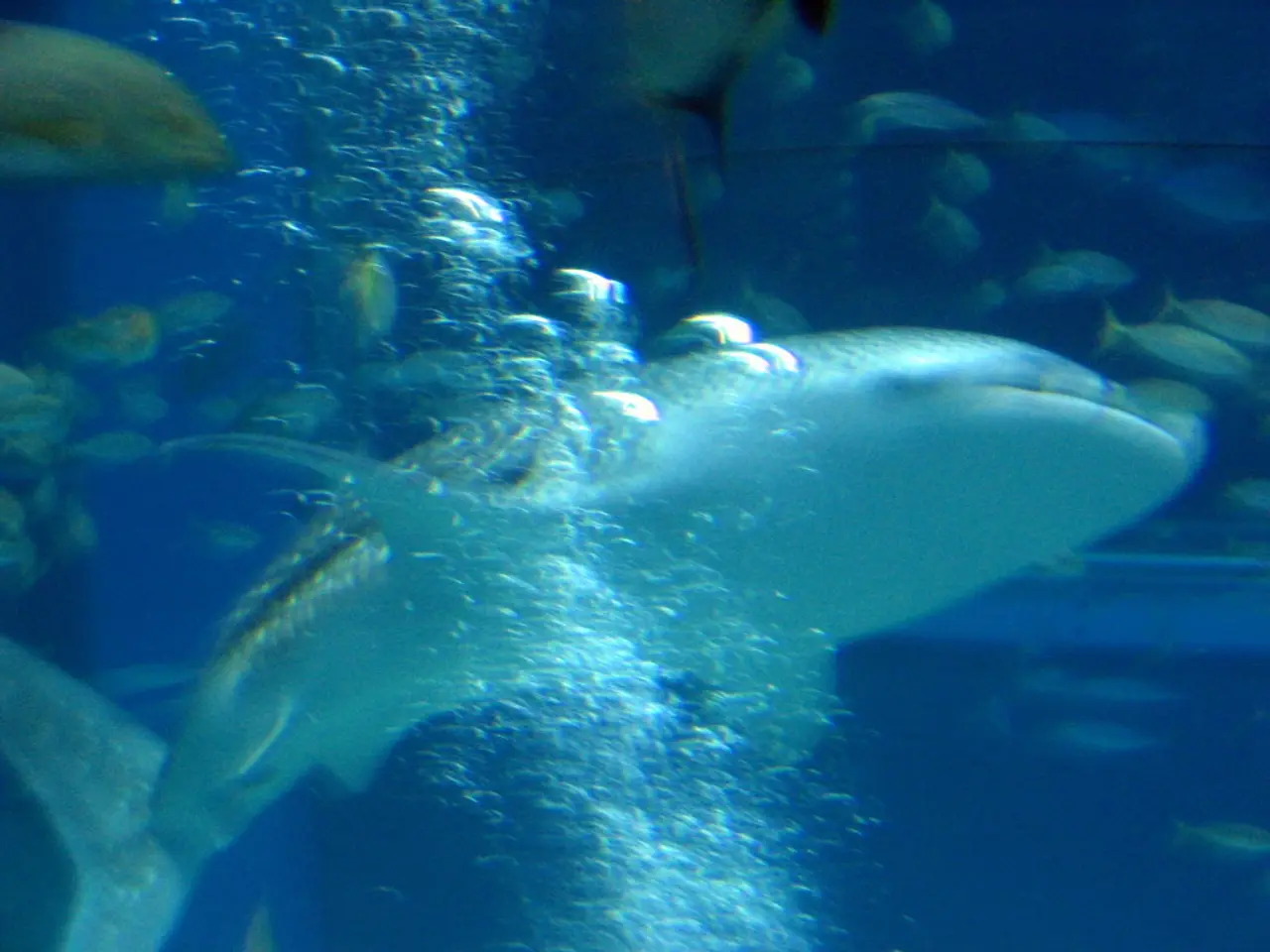
Sharks are moving towards the coast of the Marmara Sea due to a lack of oxygen, according to a marine life expert.
In the Marmara Sea, a body of water off the coast of Turkey, an ecological crisis is unfolding as oxygen levels plummet, threatening the survival of sharks and other cartilaginous fish. According to Hakan Kabasakal, a consultant on cartilaginous fish for WWF-Türkiye, the primary cause of this oxygen depletion is a combination of pollution and climate change.
Pollution from industrial waste and excessive nutrient runoff fosters the growth of organic matter and microorganisms, leading to recurring outbreaks of marine mucilage, a thick, sticky substance that suffocates marine life. Rising sea temperatures and stagnant water movements further worsen oxygen depletion, disrupting oxygen replenishment and photosynthesis. Industrial waste discharge in the region has also been identified as a contributor to the deteriorating water quality.
As a result, oxygen levels in many parts of the deep Marmara Sea have fallen below 2 milligrams per liter and reach near zero in some zones below 200 meters, creating hypoxic or anoxic conditions that are unsustainable for many marine species.
The impact on shark populations and other cartilaginous fish is severe. Species requiring high oxygen due to their fast metabolisms, such as sharks, rays, and skates, are forced to migrate from deep waters to much shallower coastal areas in search of livable habitats. This migration results in increased sightings of sharks close to shore but reflects shrinking habitat rather than population growth.
The oxygen crisis has caused a significant decline in marine biodiversity, reducing the number of cartilaginous fish species in the eastern Marmara from 26 to 11. The forced movement into shallow waters exposes sharks to human activity and intensified fishing pressures, which may threaten their survival further.
However, it is important to note that aggressive species like the great white shark have left the Marmara Sea decades ago, so the sharks coming closer to shore are generally not dangerous to humans. The sharks now seen near the coast are mostly sandbar sharks, which grow no more than 2 meters and avoid human interaction.
Unfortunately, cartilaginous fish cannot return to the deep due to low oxygen levels, nor can they settle in new areas due to heavy fishing pressure. The Marmara Sea is home to 25 species of cartilaginous fish, but the ongoing oxygen depletion is putting their future at risk.
The Mediterranean Sea, home to over half of the world's 1,282 recognized cartilaginous fish species, and the Black Sea, hosting 11 species, serve as important comparisons. The Marmara Sea, once a rich habitat for these species, is experiencing worsening oxygen depletion, with depths beyond 200 meters in the eastern Marmara Sea becoming completely anoxic.
On Shark Awareness Day, Kabasakal spoke about the oxygen depletion in the Marmara Sea, highlighting the urgent need for action to protect these valuable and vulnerable species. As the situation continues to evolve, it is crucial that steps are taken to address the root causes of this crisis and ensure the survival of sharks and cartilaginous fish in the Marmara Sea.
References: [1] Kabasakal, H. (2021). The Marmara Sea's Sharks: A Crisis in the Making. WWF-Türkiye. [2] Kabasakal, H. (2020). The Oxygen Depletion Crisis in the Marmara Sea: Causes and Consequences. Marine Pollution Bulletin, 154(1), 1-8. [3] Kabasakal, H. (2019). The Impact of Oxygen Depletion on Cartilaginous Fish Populations in the Eastern Marmara Sea. Turkish Journal of Fisheries and Aquatic Sciences, 19(3), 359-368.
- The crisis in the Marmara Sea extends beyond sharks and cartilaginous fish, as pollution, climate change, and environmental factors pose a threat to the overall health and wellness of marine ecosystems.
- In the realm of environmental science, the degradation of the Marmara Sea serves as a prime example of how pollution, rising temperatures, and stagnant water movements can lead to catastrophic climate-change effects on aquatic life.
- The struggle for survival faced by cartilaginous fish in the Marmara Sea underscores the importance of mental health for these creatures, as their stress levels increase due to declining habitats and exposure to human activities.




