
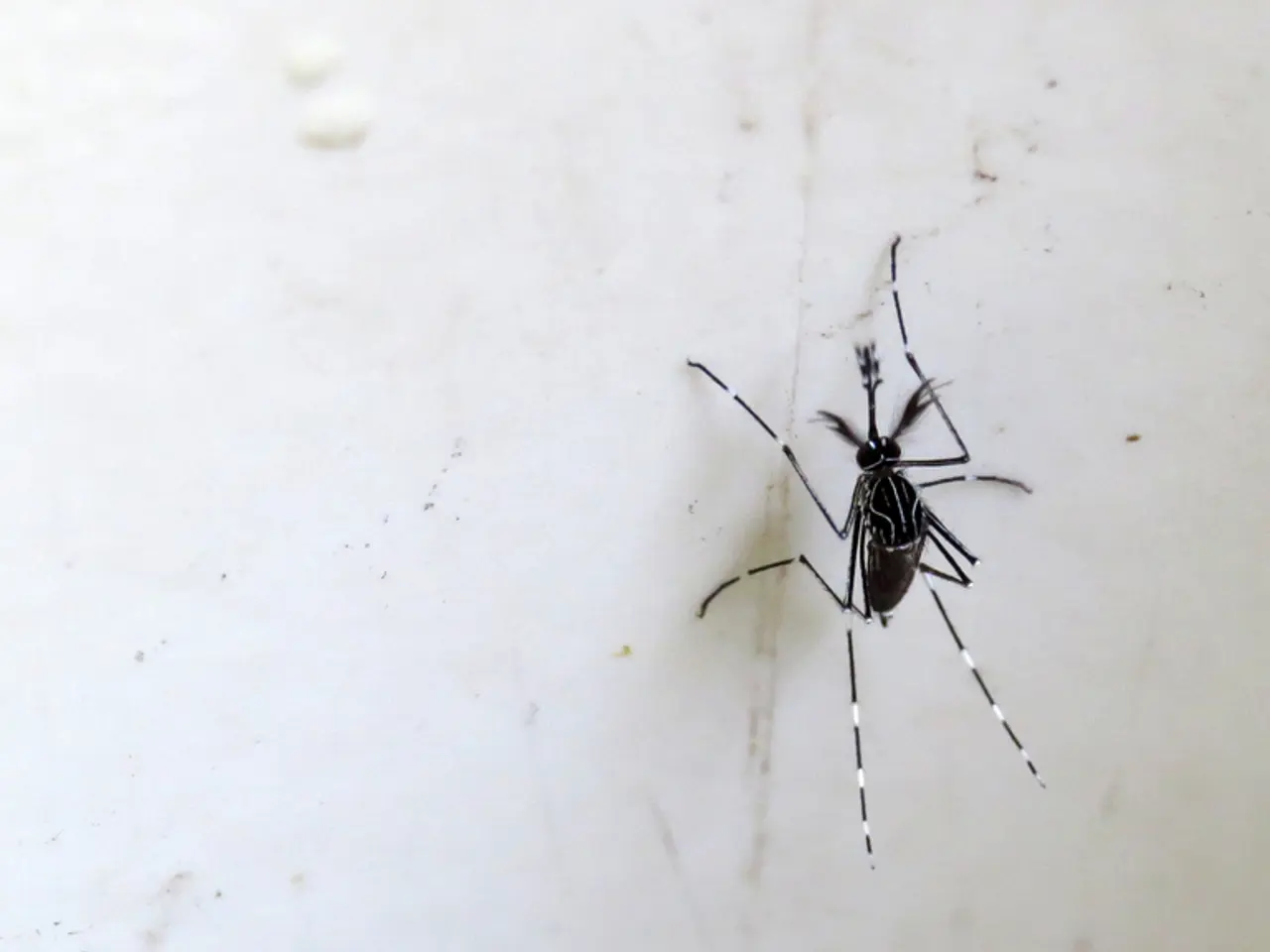
Sheridan County arranges for aerial spraying of mosquito larvicide
The Sheridan County Weed and Pest (SCWP) will be conducting an aerial mosquito larvicide application on Monday and Tuesday, July 7–8, 2025. This treatment, part of SCWP's ongoing efforts to reduce the risk of disease transmission, will be carried out across Sheridan County, Wyoming.
While the specific mosquito species targeted is not explicitly detailed, these larvicide applications typically focus on controlling nuisance pests and disease vectors such as the West Nile virus (WNV). The primary focus is often on species in the genus *Culex*, which are known to be significant vectors in the region. For exact species confirmation, contacting SCWP directly or local health authorities is advisable.
It's worth noting that although no WNV cases have been confirmed in Sheridan County this year, the virus has been detected in nearby counties such as Natrona, Laramie, and Albany. In fact, two birds have tested positive for WNV in Albany County.
SCWP monitors mosquito breeding sites across the county and uses recorded larvae counts to determine treatment timing. The operation will involve a low-flying fixed-wing aircraft along local rivers and streams. The larvicide targets several mosquito species, with a primary focus on Culex tarsalis, a species known to transmit WNV to humans, horses, and birds.
SCWP's mosquito control efforts are not limited to just Sheridan County. The Towns of Ranchester, Dayton, and Clearmont are also involved in these initiatives. These towns, along with the City of Sheridan, are part of SCWP's mosquito control efforts.
For more information about SCWP's mosquito control efforts, contact them at (307)-672-3740. This is the second of three planned treatments for the summer by SCWP, aiming to keep mosquito populations under control and minimise the risk of disease transmission.
Engaging in environmental-science practices, the Sheridan County Weed and Pest (SCWP) aims to manage health-and-wellness concerns related to medical-conditions, such as West Nile virus (WNV), by conducting aerial mosquito larvicide applications. This treatment, part of their ongoing efforts, focuses on species within the genus Culex, particularly Culex tarsalis, which can transmit WNV to humans, horses, and birds.




