
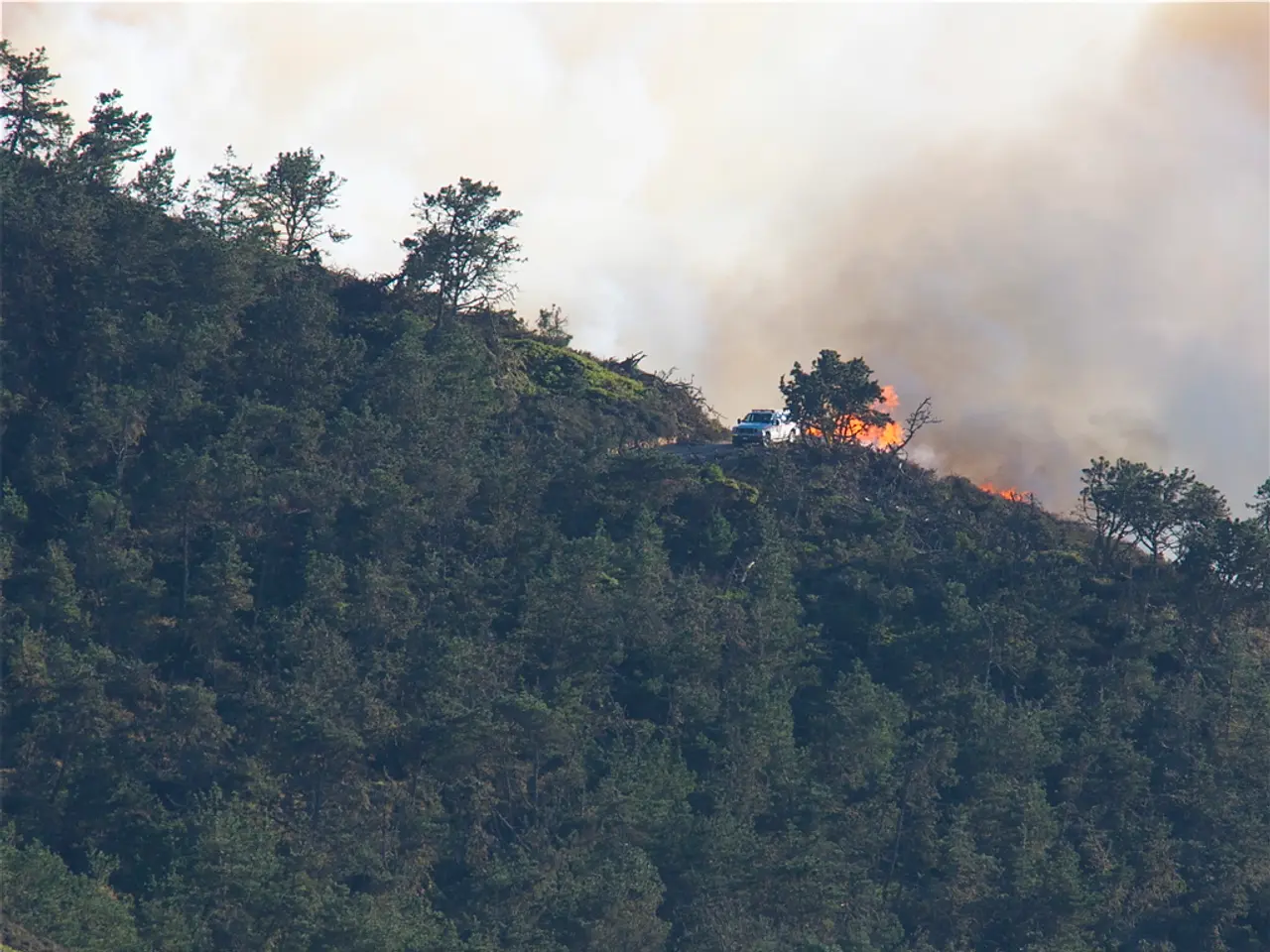
Southern Ontario continues to be blanketed by wildfire smoke, leading to air quality alerts
Environment Canada has issued a special air quality statement for the majority of southern Ontario, including Toronto, due to the persistent wildfire smoke that has been hanging over the region since the weekend [1][4]. The poor air quality is primarily attributed to hundreds of active wildfires burning across Canada, particularly in provinces like Manitoba, Ontario, and Saskatchewan during the 2025 wildfire season [1].
The smoke, composed of fine particulate matter (PM2.5), black carbon (soot), ozone, and toxic substances such as arsenic, lead, and mercury, has caused hazy skies and poor air quality warnings in the affected areas [1][2]. In fact, Toronto has experienced some of the worst air quality scores globally during this fire season, with Air Quality Health Index (AQHI) readings reaching very high levels indicative of significant health risks [2][3].
The health effects of wildfire smoke exposure in Toronto and southern Ontario include aggravation of respiratory conditions such as asthma, bronchitis, and chronic obstructive pulmonary disease (COPD). The increased risk of cardiac events like heart attacks is also a concern, as is general respiratory irritation (coughing, wheezing, throat irritation) [1][2].
Exposure to fine particulate matter (PM2.5) and ozone increases the risk of long-term cardiovascular and lung damage. Additionally, the potential inhalation of heavy metals and toxins released from burning contaminated soils contributes to additional health risks [1][2].
The combination of heat and wildfire smoke creates "double exposure" events, which exacerbate these health risks further by stressing the body’s ability to cope with heat and poor air quality simultaneously [3][5].
On Monday morning, Toronto had the fourth-worst air quality globally according to IQAir. However, after Tuesday, it is expected to begin to clear [1][4]. The statement predicts poor air quality and reduced visibility in southern Ontario, but the relief is on the horizon [1][4].
Residents are advised to stay indoors and limit outdoor activities during periods of poor air quality to minimise exposure to the smoke. Those with pre-existing respiratory conditions or heart problems are particularly vulnerable and should take extra precautions [1][2].
In summary, the wildfire smoke in southern Ontario and Toronto is caused by extensive wildfires in Canada, and its health effects range from respiratory irritation to serious cardiovascular problems due to the inhalation of fine particles, ozone, and toxic substances carried in the smoke. Air quality advisories reflect the elevated health risks during such periods [1][2][3][4].
References: [1] Environment Canada [2] Toronto Public Health [3] Health Canada [4] IQAir [5] The Weather Network
- The poor air quality resulting from wildfire smoke in southern Ontario, including Toronto, is linked to ongoing health risks, such as aggravation of respiratory conditions like asthma and heart attacks, due to exposure to fine particulate matter, ozone, and toxic substances.
- As the wildfire smoke contains heavy metals and toxins, such as arsenic, lead, and mercury, there is a concern for long-term cardiovascular and lung damage, particularly for residents with pre-existing conditions.
- Climate change could contribute to the increased frequency and intensity of wildfire seasons, raising concerns for the environmental impact on forests, the health of the population, and the overall wellness of those living in affected regions. The study of environmental science and climate change is crucial in understanding the underlying causes and finding potential mitigation strategies.




