
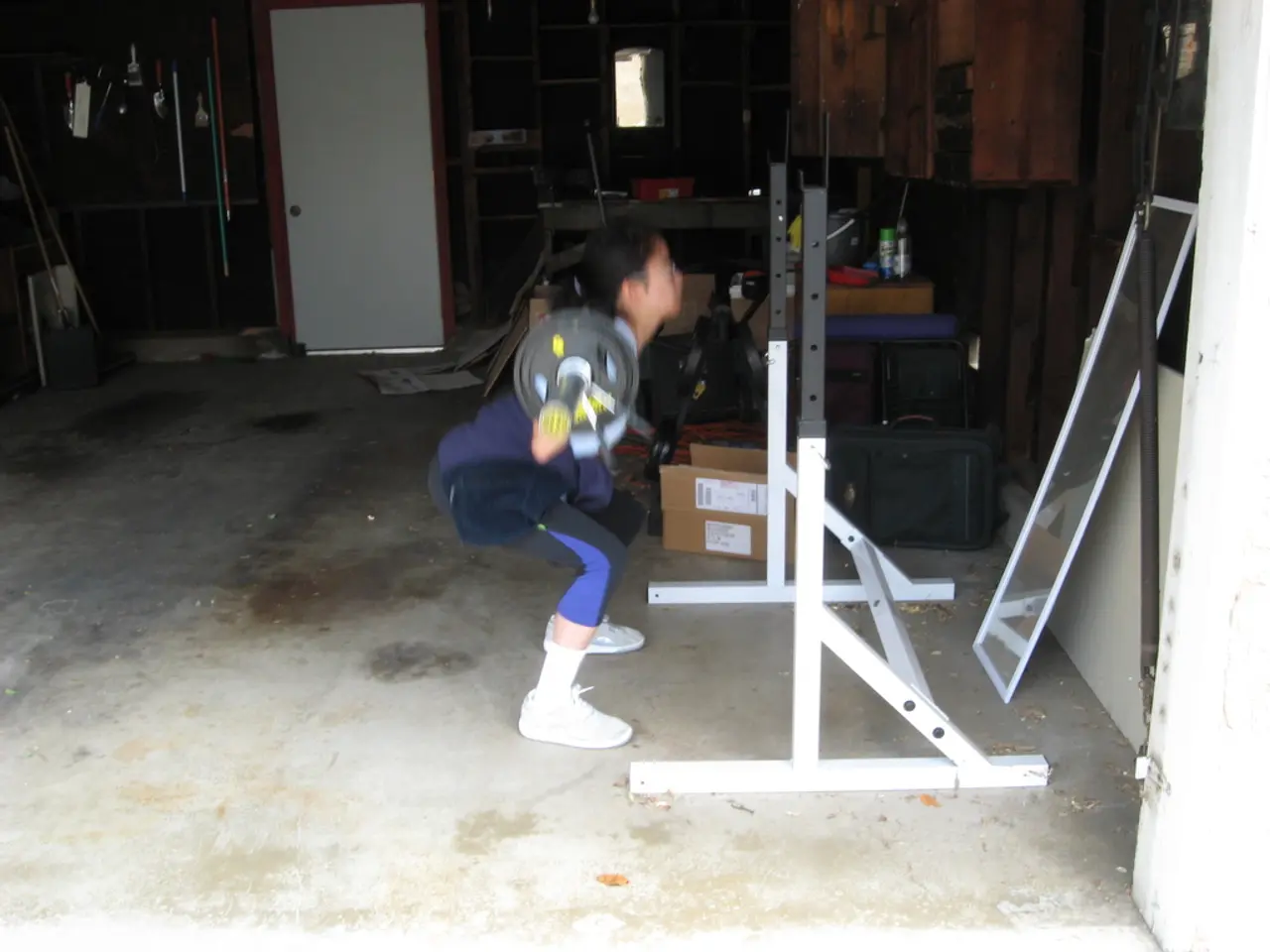
Strengthen, build muscle, and improve stability in your glutes with these three exercises, which don't necessitate squats.
In the quest for a well-toned and strong posterior, focusing on exercises that target the glutes is essential. Here, we delve into some of the best exercises for both the lengthened and shortened positions of the glutes, ensuring a thorough workout for these muscles.
Key Exercises and How to Perform Them
Romanian Deadlifts (RDLs)
Stand with feet hip-width apart, holding a barbell or dumbbells. Keeping your back straight and knees slightly bent, hinge at the hips and lower the weight while pushing your hips back. Feel the stretch in your glutes and hamstrings as you descend. Engage your glutes to pull your torso back up to the starting position. This emphasizes the glutes in their lengthened, stretched state.
Squats and Lunges
For squats, stand feet shoulder-width apart, lower your hips down and back until thighs are parallel to the floor, then drive through the heels to stand. Lunges involve stepping forward or walking lunges, bending both knees to about 90 degrees, then pushing back to start. These target glutes through both stretch (descending) and contraction (ascending).
Hip Thrusts and Glute Bridges
Lie on your back with knees bent and feet flat on the floor. Drive your hips upward by squeezing your glutes until hips are aligned with torso and thighs. Pause at the top for peak glute contraction then slowly lower down. These focus on the fully contracted (shortened) glute position to build muscle strength.
Bulgarian Split Squats
Stand about two feet from a bench or chair and place one foot behind you on it. Bend the front knee to about 90 degrees while pushing hips back to target glutes. Push up through the front foot emphasizing glute engagement rather than quads by keeping the front shin vertical and hinging hips back. This exercise develops glute strength and balance with both stretch and contraction phases.
Glute Kickbacks
Using a cable machine or resistance band attached low or high, kick the working leg back. Adjusting the cable height changes whether the glute is worked more in the shortened or lengthened position. Effective for isolating glutes through both peak contraction and stretch depending on setup.
| Exercise | Emphasizes Lengthened (Stretch) | Emphasizes Shortened (Peak Contraction) | |--------------------------|---------------------------------|------------------------------------------| | Romanian Deadlifts (RDLs) | Yes | No | | Squats | Yes | Yes | | Lunges | Yes | Yes | | Hip Thrusts/Glute Bridges| No | Yes | | Bulgarian Split Squats | Yes | Yes | | Glute Kickbacks | Both (depending on cable height)| Both (depending on cable height) |
Incorporating a combination of these movements ensures optimal glute development by working the muscles through full range of motion with proper form and progressive overload.
Tips and Considerations
- If using a dumbbell for the hip thrust exercise, place the weight just below the pelvis, on the hip bones.
- Signs of weak glutes include difficulty climbing stairs, standing up from a chair, getting out of bed, instability when standing on one leg, pain in the lower back, hips, or knees, and poor posture.
- The Bulgarian Split Squat is a single-leg exercise that targets the glute medius and glute maximus while improving balance and stability.
- The Romanian Deadlift can be done with a barbell, dumbbells, or a Smith machine.
- The hip thrust exercise targets the gluteus maximus, training it in the shortened position. A barbell pad is necessary for the hip thrust exercise to protect the hip bones from bruising as weights are scaled up.
- Walking on an incline can increase activity in the gluteus medius, boosting strength in this area, but the incline should not be too high (between 5% and 10%).
- To do a hip thrust, one sits on the floor in front of a chair or bench, places the weight across their hips, holds their feet slightly wider than hip-distance apart, squeezes their glutes, and pushes upwards until their hips come in line with their shoulders and knees.
- Kettlebells can be used to do glute exercises like the Bulgarian split squat due to their wider handle and lower weight position, which can help maintain balance and stability.
- A study in the Journal of Physical Therapy Science found that muscle activity increased at a 5% incline compared to flat walking, but decreased at 10%.
- Experts recommend strength training two to three days a week to see progress without fatigue.
- To do a Romanian deadlift, one stands with their feet shoulder-width apart, grabs hold of two dumbbells, bends their knees slightly, keeps their core engaged and back straight, pushes their glutes to the back of the room, and then squeezes their glutes and pushes their hips forward.
- The Bulgarian Split Squat is considered challenging due to its fatiguing nature.
- The hip thrust exercise can be performed using dumbbells, a barbell, or kettlebells.
- An expert tip for the Bulgarian split squat is to keep the front shin vertical and hinge the hips back as one comes down to bias the glutes over the quads.
- The Romanian Deadlift exercise works the glutes in the lengthened position.
- It takes between six and eight weeks to strengthen and build the glute muscles, but this depends on factors like how often one lifts weights, the intensity of training, diet, and genetics.
- To maximize glute engagement in the Romanian Deadlift, keep a slight bend to the knee throughout the exercise.
- To do a Bulgarian split squat, one sets up a bench or chair behind them, stands with feet shoulder-width apart, puts one foot behind on the bench, sinks down while putting body weight through the front leg, and pushes up through the ball of the front foot to return to the starting position.
- Romanian Deadlifts, Squats, Lunges, Bulgarian Split Squats, and Glute Kickbacks are key exercises in a home health-and-wellness routine that focus on fitness-and-exercise, ensuring a balanced workout for the glutes through both lengthened and shortened positions.
- Using a cable machine or resistance band for Glute Kickbacks allows for variations, emphasizing the glutes in their shortened or lengthened positions, thus catering to different stages of the muscle's range of motion.
- Incorporating strength training exercises for the glutes, such as Squats, Hip Thrusts/Glute Bridges, and Bulgarian Split Squats, can alleviate symptoms of weak glutes, including difficulty standing, pain in the lower back, hips, or knees, and poor posture.
- To perform a kettlebell-assisted Bulgarian Split Squat, one can maintain balance and stability, hitting various aspects of glute development while challenging the muscles through both stretch and contraction phases.
- Incorporating incline walking into one's daily routine, with a gradient between 5% and 10%, can boost activity in the gluteus medius, consequently enhancing overall glute strength and posture.




