
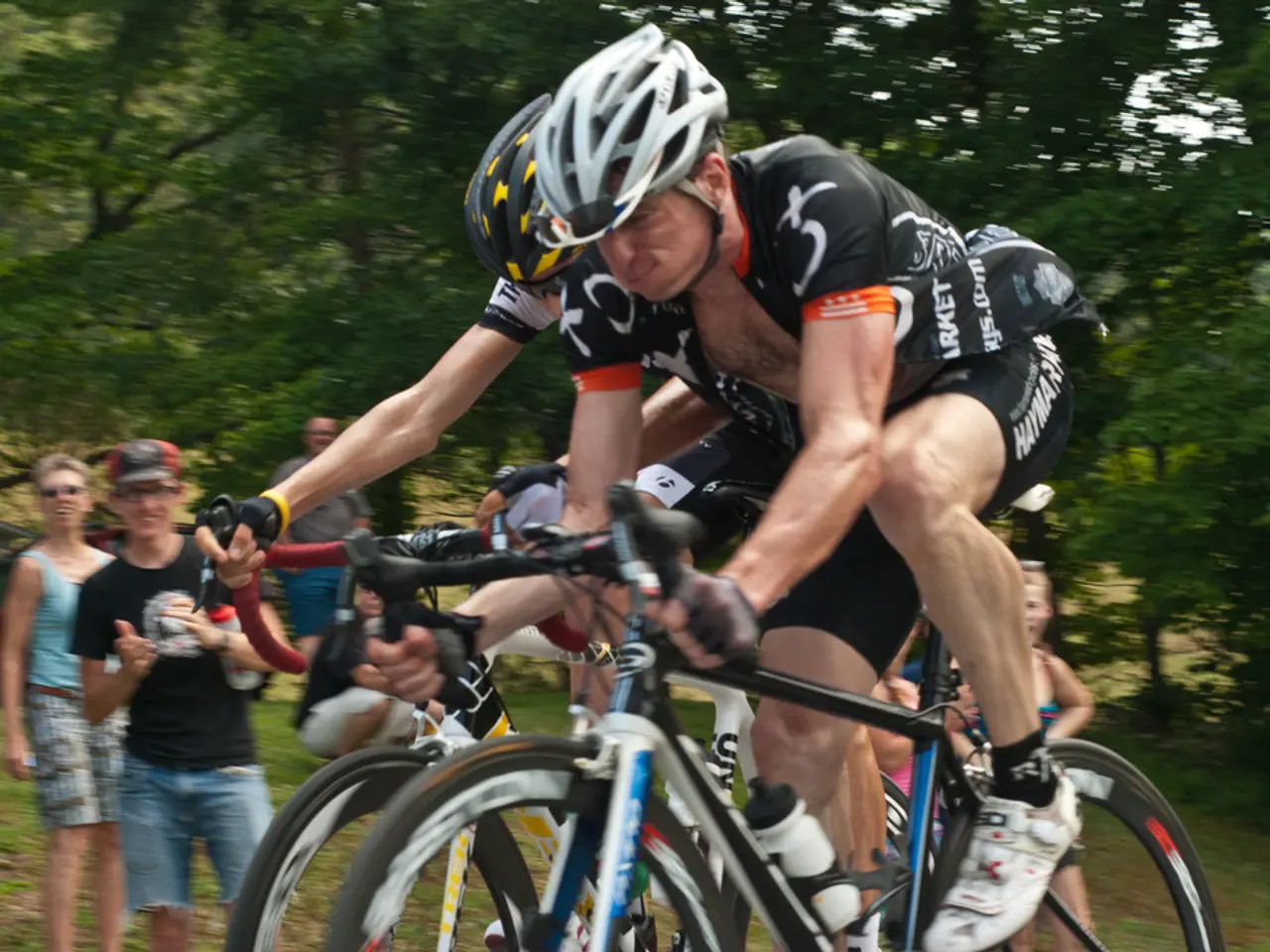
Struggling cyclist hails acclaim as authentic athlete, yet grappling with deadly eating disorders: The urgency for male cyclists to discuss food-related health struggles openly
In the world of competitive cycling, a silent struggle has been brewing for years. A study published in the Journal of the American Dietetic Association in 2007 revealed that 19.7% of male cyclists surveyed were at risk of disordered eating behaviors, a figure that has since been estimated to be as high as 6%.
These behaviors, often driven by the pressure to maintain a specific body weight and composition for optimal performance, can lead to a host of physiological and psychological issues. One such issue is Low Energy Availability (LEA), which can result in hormonal imbalances, decreased bone density, fatigue, and impaired performance.
The psychological consequences are equally alarming. Research suggests that male cyclists are at an increased risk of depression and anxiety, often linked with disordered eating behaviors. The pressure to perform, combined with the metrics culture in cycling, creates the perfect recipe for disordered eating and body image issues.
A cyclist, after years of treatment and therapy, is now in a place where they can again ride competitively and speak out about their experiences. They shared how they started controlling their food intake as a way of coping with adult life, which gradually became an exhausting routine that they knew was killing them.
The intersection of performance obsession, weight-consciousness, and metrics culture in cycling is indeed a challenging one. It's crucial for coaches and teammates to be mindful of their language, as even seemingly innocent comments can have lasting consequences. A comment like "If you lost a bit of weight, you'd climb faster," can trigger harmful behaviors.
Research indicates that male cyclists may represent up to 40% of eating disorder cases, but are less likely to be identified and treated. This is concerning, considering that eating disorders have the highest mortality rate of any mental illness, with an estimated 5-10% of people with anorexia dying from the condition.
To intervene early, it's essential to be aware of signs such as withdrawal from meals, eating alone, frequent comments about feeling fat, obsessive eating habits, restrictive patterns, cutting out food groups without medical reason, overtraining, or "calorie accounting" via rides or workouts.
In 2019, there was a reported increase of 5x in male cyclists referred for eating disorders. This underscores the need for increased awareness and early intervention. The estimated figure of 20% of male cyclists being at risk of developing an eating disorder may be far too low.
As the world of cycling continues to evolve, it's crucial that we address these issues head-on. By fostering a culture that supports mental health and encourages open discussions about disordered eating, we can help ensure that the sport remains a healthy and enjoyable pursuit for all.
- The intersection of sports performance, mental health, and nutrition in cycling is critical, as a comment like "If you lost a bit of weight, you'd climb faster," can lead to disordered eating and possibly develop into an eating disorder.
- It's alarming that male cyclists may be underrepresented in eating disorder statistics, as research indicates they represent up to 40% of cases, with disordered eating behaviors often linked to increased risk of depression and anxiety, and having the highest mortality rate among all mental illnesses.




