
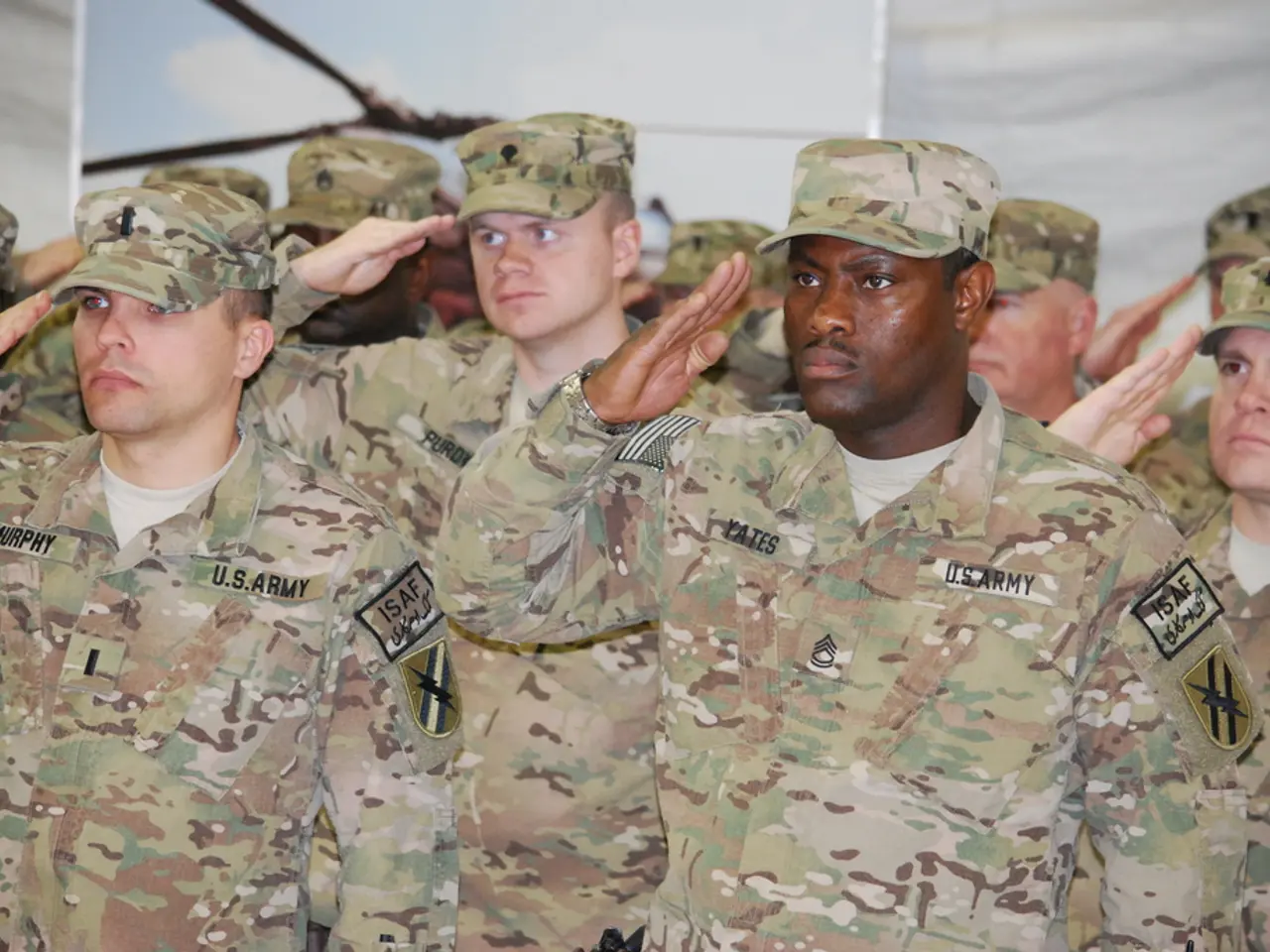
The Senior Medic's Duties in the Military
The U.S. Army's senior medics, often referred to as the "angels of the battlefield," play a crucial role in treating injured soldiers and ensuring medical readiness. These senior medics align with the senior enlisted ranks responsible for medical support and leadership at various unit levels, starting from Sergeant First Class (E-7) and above.
At the E-8 level, we find Master Sergeants (MSG) who serve as technical experts and managers, supporting operations planning and staff activities, including medical support functions within their battalion or higher-level unit. They provide senior-level advice and ensure policies and procedures are followed, often related to medical operations.
First Sergeants (1SG, E-8) act as the senior enlisted adviser at the company level, responsible for the health, morale, training, and welfare of all soldiers in the company, potentially including medical personnel under their supervision. They work closely with the company commander to maintain unit readiness and cohesion.
At the highest enlisted level, Sergeant Majors (SGM, E-9) serve as senior enlisted advisers at the battalion or higher command levels. Their focus includes overseeing training, operations, and resource planning for medical units or sections. They often balance staff functions and the direct leadership of soldiers.
The Command Sergeant Major (CSM, senior E-9) is the senior enlisted advisor to a commander of a battalion or larger unit, including medical commands. They advise on enlisted issues such as morale, welfare, medical readiness, and training. They are the top enlisted leader responsible for all enlisted personnel in the unit, including medics.
These senior medics have both clinical and leadership responsibilities, often overseeing the training and welfare of junior medics, managing medical logistics, and advising commanders on health service support and casualty care. Although the Army does not have a distinct "senior medic" rank separate from the established enlisted ranks, senior medics are typically senior NCOs within this hierarchy who combine medical expertise with leadership roles at the company, battalion, or brigade levels.
In specialized units like Special Forces, senior medics may hold ranks such as Staff Sergeant or Gunnery Sergeant and have additional responsibilities related to team health and tactical support, but always within the structure of senior enlisted ranks.
The hierarchy of senior medics matches the broader Army NCO rank structure where senior medics at the E-7 to E-9 levels take on increasing leadership and advisory roles in providing medical readiness, training, and health services both in garrison and deployed operations.
Battlefield medicine has seen significant improvements in techniques and survival rates for soldiers injured in battle. Innovations such as the use of medevac helicopters during the Vietnam War, which reduced the time from battlefield to field hospital from two days to two hours, have been instrumental in these improvements.
Historically, the role of senior medics can be traced back to figures like Napoleon's chief surgeon, Dr. Dominique-Jean Larrey, who introduced triage and battlefield ambulances for the removal of wounded combatants. Despite the poor sanitation practices in Civil War field hospitals, leading to widespread infections and death among the wounded, the command sergeant major today is in a unique position to affect the drafting of Army medical policies and their implementation.
In summary, the hierarchy of senior medics in the U.S. Army reflects the broader Army NCO rank structure, where senior medics at the E-7 to E-9 levels take on increasing leadership and advisory roles in providing medical readiness, training, and health services both in garrison and deployed operations. Every other Army medic pays close attention when the command sergeant major enters the room, recognising the importance of this senior enlisted leader in ensuring orders related to combat medics are carried out.
- The history of battlefield medicine demonstrates the crucial role of senior medics, as evidenced by figures like Napoleon's chief surgeon, Dr. Dominique-Jean Larrey, who introduced innovative practices such as triage and battlefield ambulances.
- In the present context, senior medics play a pivotal role in ensuring health and wellness, both for medical personnel and soldiers at large. At the highest ranks, from Sergeant Majors to Command Sergeant Major, they oversee training, operations, and resource planning for medical units or sections, and act as senior enlisted advisers to commanders, providing advice on medical readiness, training, and health service support.




