
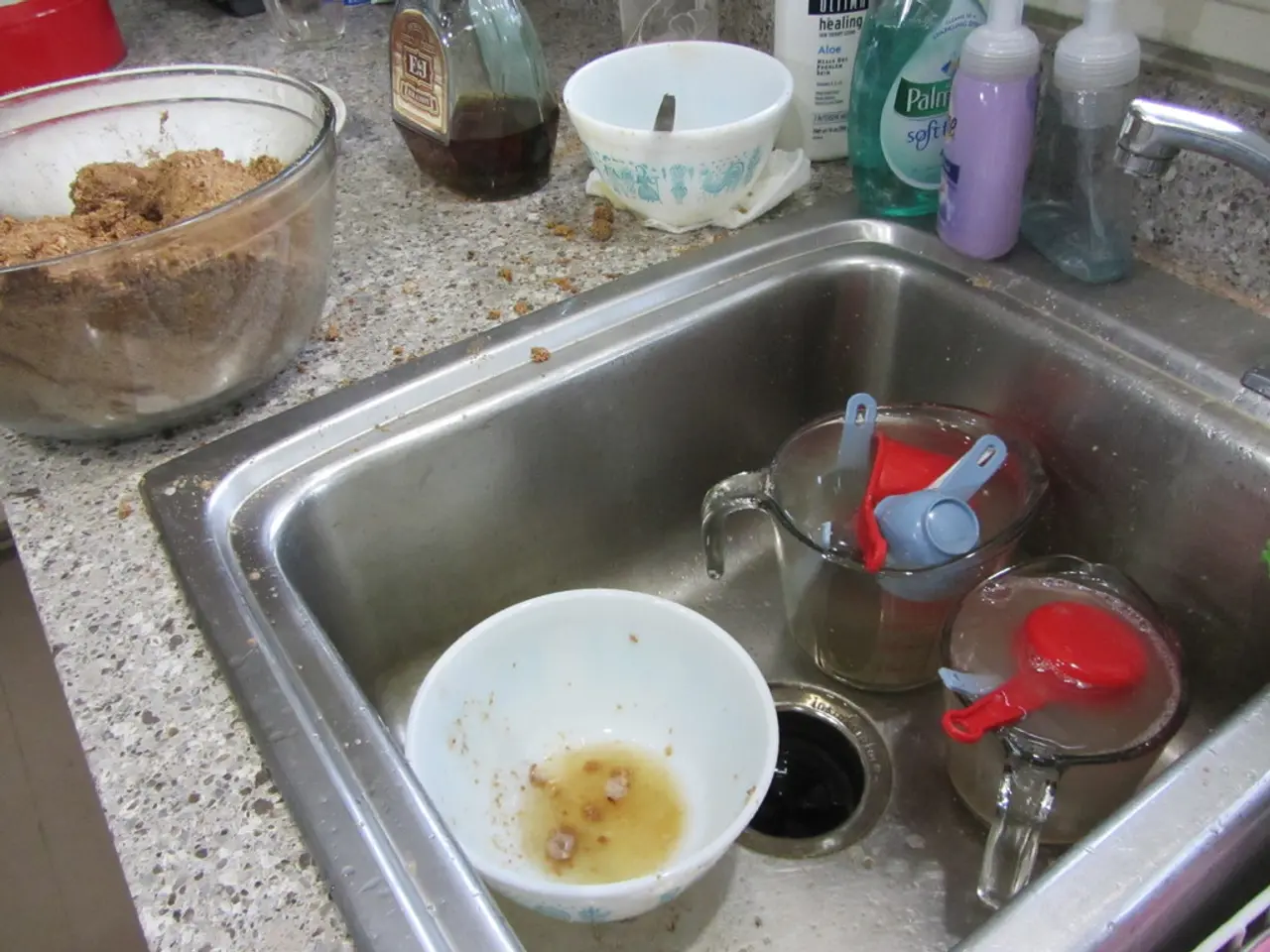
To ensure culinary safety, it's essential to maintain a sanitary kitchen environment during meal preparation.
In the growing trend of meal prep, ensuring food safety is of utmost importance. The Federal Institute for Risk Assessment (BfR) offers valuable guidelines to help reduce the risk of cross-contamination with germs during meal prep.
Firstly, it's essential to separate raw and cooked foods. Keep raw meat, poultry, seafood, and their juices away from ready-to-eat foods to prevent cross-contamination. Use separate cutting boards, utensils, and prep surfaces for raw and cooked items to avoid any potential transfer of harmful bacteria.
Thoroughly wash and sanitize countertops, cutting boards, knives, and other utensils with hot soapy water immediately after contact with raw meat or poultry. This is crucial for preventing the transfer of harmful bacteria.
Washing hands frequently is also vital. Wash your hands with soap and water before and after handling raw foods, especially meat and poultry, to reduce germ spread.
When storing meals, keep leftovers and prepared meals separate from raw foods in the refrigerator, using sealed containers to prevent leaks and contamination from raw food juices. When freezing meals, use airtight, freezer-safe containers or vacuum-sealed bags to maintain food safety and prevent odors transferring between foods.
Cool cooked foods before freezing to prevent raising freezer temperature, which can partially thaw other frozen items and promote bacterial growth. Always thaw meat or poultry safely, either in the refrigerator or microwave, to minimize bacterial growth risks.
During preparation and reheating, foods should reach at least 70 degrees Celsius for two minutes at all points of the food, as advised by the BfR. Prepare foods that do not require heating before consumption, such as desserts, raw vegetables, or salads, first in meal prep.
The strict order of cooking in meal prep is to prevent cross-contamination with germs. Prepare meals that require heating during meal prep first, as most microorganisms will die at temperatures between 70 and 100 degrees Celsius.
Fruits, vegetables, and fresh herbs should be carefully washed before preparation or consumption, preferably under running tap water, according to the BfR. To protect against illness, not only raw animal products but also raw sprouts and frozen berries should be heated sufficiently before consumption.
Cross-contamination with germs is a concern during meal prep, as it could potentially lead to foodborne illnesses. An indirect transmission path of germs could occur via hands, utensils, work surfaces, knives, or other kitchen tools during meal prep.
By following these practices, you can significantly reduce the risk of foodborne illness by preventing cross-contamination in your meal prep routine. Happy and safe meal prepping!
- To maintain health-and-wellness and safety while meal prepping, follow the guidelines provided by the Federal Institute for Risk Assessment (BfR) regarding proper separation of raw and cooked foods.
- Incorporate science into your lifestyle by using therapies-and-treatments such as food-and-drink-related habits which ensure food safety in your meal-prep routine.
- While cooking, prioritize food-and-drink items that require heating first in your meal-prep order, as according to the BfR, most microorganisms will die at temperatures between 70 and 100 degrees Celsius.




