
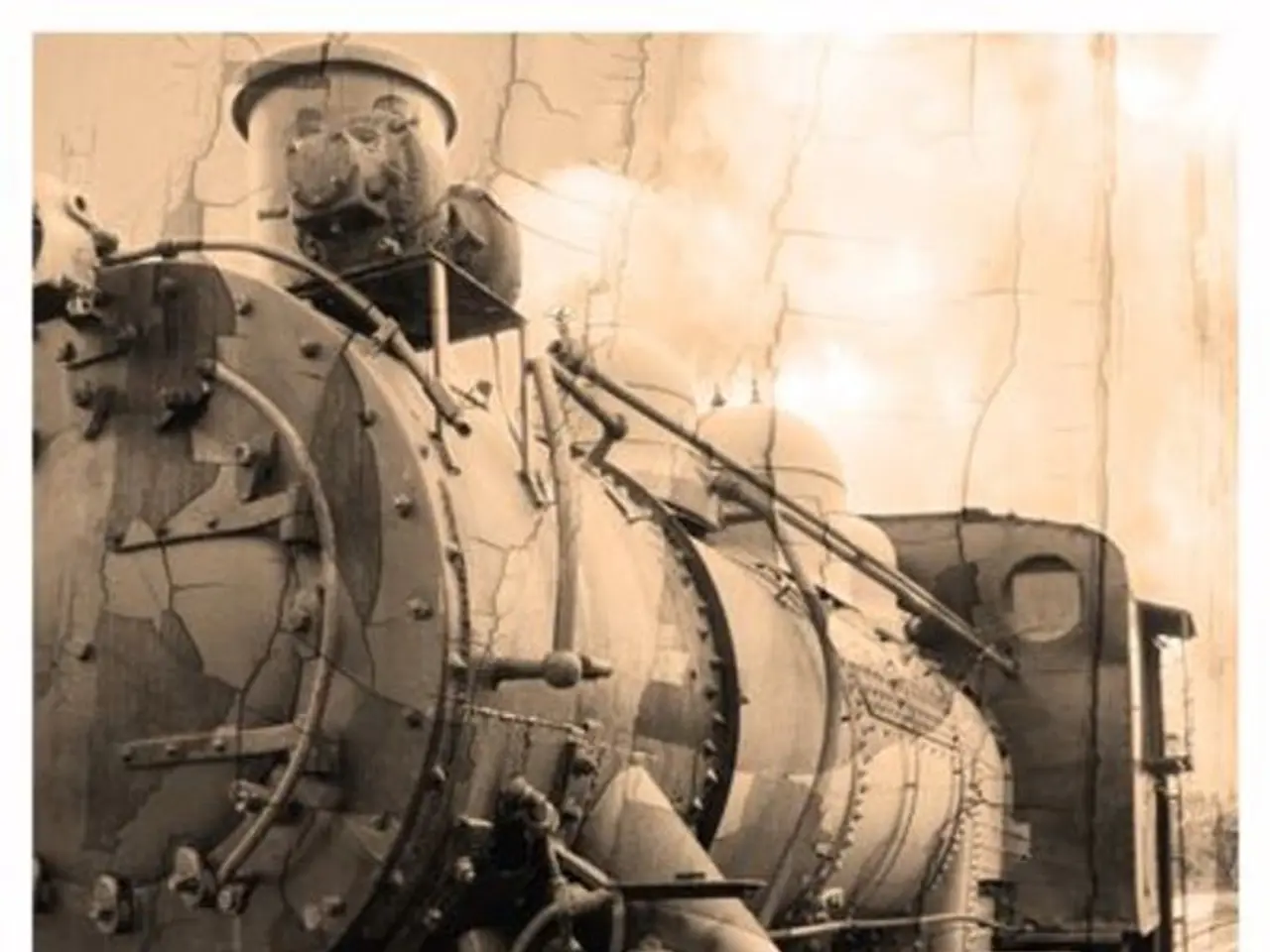
Train conductor discusses aftermath of passenger's self-inflicted train death
Headline: Strict Penalties for Reckless Behavior Near Railway Tracks in Germany
In Germany, laws and regulations are in place to ensure the safety of railway operations and protect passengers. These measures, which include fines, imprisonment, and administrative penalties, are enforced to deter reckless behavior that poses a significant risk to life and disrupts operations.
Trespassing on Railway Property
Unauthorized entry onto railway tracks or infrastructure is prohibited under railway safety regulations. Violators can face fines and, in severe cases, criminal charges, as trespassing poses a significant risk to life and disrupts operations.
Endangering Safety
Deliberate or grossly negligent acts that endanger train operations, such as placing obstacles on tracks or interfering with signals, can lead to imprisonment of up to five years or fines.
Reckless Conduct Causing Accidents
If reckless conduct causes injury or death on railway premises, penalties escalate significantly, including long-term imprisonment.
Existing Legal Framework
While the 2025-2026 updates to safety systems and operation directives by DB Infra GO aim to tighten operational safety, these do not alter the baseline legal penalties for reckless conduct near tracks as defined by national law.
The Impact on Train Drivers
For train drivers like Andreas Zimmer, who has been a driver for over 20 years, the consequences of reckless behavior can be devastating. Zimmer experienced a fatal person-hit accident 15 years ago on the route between Mainz and Ludwigshafam, an event that has left a lasting impact.
After the accident, Zimmer sought psychological help and was treated ambulatorily at the BG clinic in Ludwigshafen. He believes that Post-Traumatic Stress Disorder should be recognized as an occupational disease for train drivers.
Zimmer returned to the driver's cab of a train after about four weeks with the support of his employer, DB Regio. However, many affected train drivers cannot return to work after traumatic experiences.
The "Two-Legged Wildlife Crossing"
Train drivers refer to individuals who run across the tracks without being aware of the danger as the "two-legged wildlife crossing." This reckless behavior puts both train drivers and passengers in danger. Some passengers have even physically attacked train drivers, venting their frustration on railway staff.
The Need for Higher Penalties
Andreas Zimmer finds it troubling that passengers vent their frustration on railway staff, especially considering the current penalties for endangering train drivers cost only 15 euros. Zimmer argues that these penalties are too low and should be increased to deter such behavior.
The Road to Recovery
After a half-year therapy, Zimmer can now pass the accident site without triggering all the memories again. However, the trauma of the accident remains, serving as a reminder of the importance of safety and the need for stricter penalties for reckless behavior near railway tracks.
Sources:
- DB Infra GO 2026 Updates
- German Railway Act (EBO)
- German Penal Code (StGB)
- Despite the updates to safety systems and operation directives by DB Infra GO in 2025-2026, the baseline legal penalties for reckless conduct near railway tracks remain as defined by national law.
- With the growing instances of passengers attacking train drivers, some argue that the current penalties for endangering train drivers, which amount to only 15 euros, are too low and need to be increased to deter such behavior.
- Post-Traumatic Stress Disorder is not recognized as an occupational disease for train drivers, but Andreas Zimmer, a train driver who has been in the field for over 20 years, advocates for this recognition due to the lasting impact of traumatic experiences, such as fatal person-hit accidents.




